
 Elizabeth
Understanding the Pulse of the Market: Drivers of Volatility
The financial markets are a dynamic ecosystem, constantly influenced by a multitude of factors that can cause its rhythms to quicken or slow. This ebb and flow, often characterized by rapid price swings, is what we refer to as market volatility. For investors and businesses alike, understanding the forces behind this volatility is crucial for navigating the landscape effectively and making informed decisions. At the heart of these market movements are the “key business headlines” – the significant news stories that capture the attention of traders and analysts, prompting immediate reactions and shaping the direction of financial assets. These headlines emerge with a consistent daily cadence, originating from a diverse array of reputable sources including financial news outlets, company press releases, government agencies, and economic research firms.
The Concept of Market Volatility and Its Impact
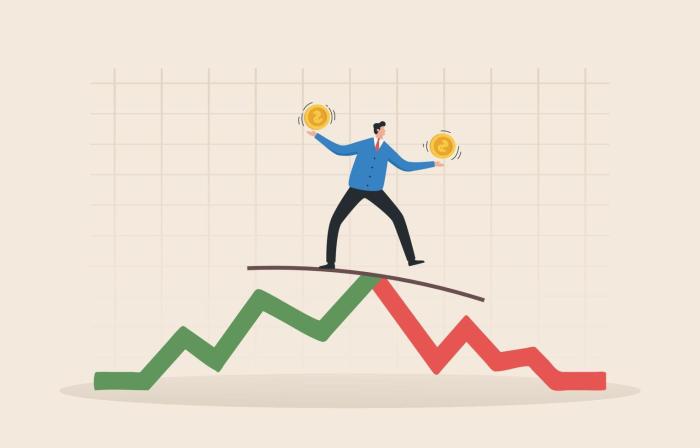
Market volatility refers to the degree of variation of a trading price series over time, usually measured by the standard deviation of logarithmic returns. High volatility signifies that prices are subject to large and rapid changes, often accompanied by increased uncertainty. Conversely, low volatility suggests more stable price movements. The impact of volatility on financial markets is profound. It can create opportunities for profit for those who can anticipate and react to price swings, but it also significantly amplifies risk. For businesses, heightened volatility can lead to challenges in financial planning, increased borrowing costs, and a more cautious investment environment. Understanding the drivers of this volatility, therefore, is not just an academic exercise; it’s a fundamental aspect of financial stewardship.
Defining Key Business Headlines
In the context of driving market movements, “key business headlines” are those news items that carry substantial implications for the profitability, growth prospects, or operational stability of major companies, industries, or the economy as a whole. These aren’t just everyday updates; they are the significant announcements, policy shifts, or economic data releases that have the power to sway investor sentiment and trigger substantial trading activity. Their influence stems from their ability to alter the perceived value of assets or the future outlook for businesses. The frequency of these impactful headlines is daily, reflecting the ceaseless flow of information in the global economy. Sources are varied, ranging from the official statements of central banks and government bodies to the quarterly earnings reports of publicly traded corporations and breaking news from major financial news agencies.
Decoding the Signals: Major Headline Categories Shaping Markets: Daily Business News: Key Business Headlines Driving Market Volatility
The financial world doesn’t react to every piece of news with the same intensity. Certain categories of business headlines consistently emerge as powerful catalysts for significant market shifts. Recognizing these categories allows for a more proactive and insightful approach to market analysis. These are the stories that grab headlines and, more importantly, move markets.
Economic Indicators and Their Market Implications
Economic indicators are the report cards of a nation’s financial health, and their release is often a focal point for market participants. Key among these are inflation rates, which signal the pace at which prices are rising, impacting consumer purchasing power and corporate costs. Higher-than-expected inflation often prompts concerns about interest rate hikes, which can dampen stock market enthusiasm. Employment figures, such as unemployment rates and job creation numbers, are also critical. Strong job growth typically indicates a robust economy, which can be positive for equities, while rising unemployment can signal a slowdown. The reporting of these indicators is usually through official government statistics agencies, and their implications are direct: a strong report often boosts market confidence, while a weak one can lead to sell-offs.
Corporate Earnings Reports and Volatility
Corporate earnings reports are perhaps the most anticipated and often the most volatile news events for individual stocks and the broader market. These reports provide a snapshot of a company’s financial performance, detailing its revenues, profits, and future outlook. When a company announces earnings that significantly beat analyst expectations, its stock price often soars as investors gain confidence in its growth trajectory. Conversely, an earnings “miss” – where profits fall short of forecasts – can trigger sharp declines, as it raises questions about the company’s operational efficiency or market demand for its products. The market’s reaction is highly sensitive to the magnitude of the beat or miss, as well as any forward-looking guidance provided by management.
The Influence of Geopolitical Events
Geopolitical events, ranging from international trade disputes and political instability to major conflicts, cast a long shadow over global business sentiment and market behavior. Uncertainty stemming from these events can lead to increased risk aversion among investors, prompting a move away from riskier assets like stocks towards safer havens like gold or government bonds. For instance, escalating trade tensions between major economies can disrupt supply chains, increase import costs, and dampen international investment, all of which can negatively impact corporate earnings and stock valuations across various sectors. The interconnectedness of the global economy means that even events in seemingly distant regions can have ripple effects felt in markets worldwide.
The Specific Impact of News Types on Market Sectors
Different types of business news have a more pronounced effect on specific market sectors. Understanding these sector-specific impacts allows for a more nuanced analysis of how headlines translate into price movements across the financial landscape.
Technology Sector Dynamics: Product Launches and Regulations
News related to the technology sector, such as the launch of innovative new products or significant regulatory changes, can dramatically affect stock prices. A groundbreaking product announcement from a major tech company can send its stock soaring, as it signals new revenue streams and market dominance. Conversely, news of regulatory hurdles, antitrust investigations, or data privacy breaches can lead to sharp sell-offs. For example, a new smartphone release from a leading manufacturer can boost not only its own stock but also the stocks of its suppliers. Similarly, new government regulations on artificial intelligence or social media platforms can create uncertainty and volatility for companies operating in those spaces.
Energy Market News: Supply, Demand, and Price Fluctuations
The energy market is inherently volatile, and news related to supply disruptions, geopolitical events affecting production, or changes in global demand can have far-reaching consequences. For instance, a sudden disruption in oil supply due to political unrest in a major producing region can cause oil prices to spike, benefiting energy exploration and production companies while increasing costs for transportation and manufacturing industries. Conversely, advancements in renewable energy technologies or a significant increase in oil production can lead to price declines, impacting the profitability of traditional energy companies. These price shifts directly influence the cost of doing business for a vast array of industries.
Consumer Spending Reports and Retail/E-commerce
Reports on consumer spending are a critical barometer for the health of the retail and e-commerce sectors. When consumer spending is robust, it signals strong demand for goods and services, which is a positive indicator for businesses in these sectors. Conversely, a slowdown in consumer spending, often reflected in retail sales figures or consumer confidence surveys, can lead to concerns about declining revenues and profits for retailers and online platforms. For example, a strong holiday shopping season, as indicated by robust retail sales data, would likely boost the stock prices of major retailers and e-commerce giants.
Interest Rate Policies and Asset Class Effects
Changes in interest rate policies, communicated by central banks, have a broad and significant effect on various asset classes. When interest rates rise, borrowing becomes more expensive, which can slow down economic activity and make fixed-income investments more attractive relative to equities. Higher rates can also increase the cost of capital for businesses, potentially impacting their growth plans and profitability. Conversely, a decrease in interest rates typically makes borrowing cheaper, encouraging investment and consumption, which can be a boon for the stock market. The communication of these policy changes is closely watched, as it provides forward guidance on the economic outlook and influences investment decisions across the board.
Unpacking the Nuances: Analyzing Headline Sentiment
The way a business headline is phrased and the sentiment it conveys can significantly influence how the market interprets and reacts to the information. It’s not just about the facts presented, but also the tone and underlying message.
The Power of Language and Tone
The language used in a business headline can dramatically shape market interpretation. A headline that uses strong, definitive language, such as “record profits” or “crippling losses,” will likely elicit a more pronounced reaction than one that is more measured, like “improved earnings” or “declining sales.” The tone – whether optimistic, cautious, or alarming – sets the initial emotional response of investors. For example, a headline announcing a company’s expansion plans with words like “aggressive growth” will be perceived differently than one stating “steady expansion,” even if the underlying business activity is similar. This emotional resonance can quickly translate into buying or selling pressure.
Subtle Wording and Investor Reactions
Subtle wording in news reports can lead to vastly different investor reactions. Consider the difference between a headline stating “Company X misses earnings estimates” versus “Company X reports earnings below expectations.” While conveying similar factual information, the former often carries a more negative connotation and can trigger a stronger sell-off. Similarly, a report on a new product might be framed as a “game-changer” or simply a “new offering.” The former implies a significant market impact and potential for high returns, leading to more enthusiastic investor interest. Understanding these nuances is key to discerning the true market sentiment beyond the surface-level information.
Gauging Overall Headline Sentiment
Gauging the overall sentiment conveyed by a collection of daily business headlines involves looking beyond individual stories to identify overarching themes and trends. This can be done by analyzing the frequency of positive versus negative language across multiple reports, the general direction of market reactions to similar news items, and the pronouncements from influential economic commentators. For instance, if a majority of headlines over a week focus on rising inflation and potential interest rate hikes, the overall market sentiment will likely be cautious or bearish. Conversely, a week dominated by news of technological breakthroughs and strong corporate earnings would foster a more optimistic outlook.
Structuring Insights: Presenting News-Driven Market Information
Effectively presenting information about how business news influences market volatility requires a structured and clear approach. This helps in distilling complex information into actionable insights.
A Framework for News-Influenced Market Volatility
A robust framework for presenting daily business news that influences market volatility begins with identifying the most impactful headlines. This involves prioritizing news based on its potential to affect a broad range of assets or a significant market sector. The framework should then categorize these headlines by their primary driver – economic data, corporate announcements, geopolitical events, or policy changes. Finally, it should include an assessment of the likely market reaction and the potential duration of that impact. This structured approach ensures that key information is not lost and that the connections between news and market movements are clearly articulated.
Template for Summarizing Impactful Headlines
A useful template for summarizing the core message of impactful headlines would include the following elements:
- Headline Summary: A concise restatement of the news item.
- Key Data/Event: The specific figure, announcement, or event driving the news.
- Market Implication: A brief explanation of how this news is expected to affect asset prices or market sentiment.
- Sector Focus: Identification of the specific market sectors most likely to be impacted.
- Sentiment Indicator: A quick gauge of the likely sentiment (e.g., bullish, bearish, neutral, uncertain).
Illustrating Immediate Market Reaction
To illustrate the immediate market reaction to a significant business announcement, one could use a narrative approach. This would involve describing the news event, followed by a description of the initial trading activity. For example: “Following [Company Name]’s announcement of a substantial earnings beat, trading volume for its stock surged in the pre-market session. As the market opened, the stock immediately gapped up by X%, reflecting strong investor enthusiasm. Analysts quickly revised their price targets upwards, further fueling the positive momentum.” This narrative captures the swift and often dramatic initial response.
Categorizing News by Fluctuation Potential
Categorizing news items by their potential to cause short-term versus long-term market fluctuations is essential for strategic planning.
- Short-Term Volatility: Typically driven by unexpected economic data releases, immediate corporate earnings surprises, or sudden geopolitical developments. These events often cause sharp, but potentially temporary, price swings.
- Long-Term Fluctuations: Influenced by structural economic changes, major policy shifts (like significant tax reforms or trade agreements), or technological disruptions that fundamentally alter an industry’s landscape. These tend to shape market trends over months or even years.
Real-World Scenarios: Volatility-Inducing Headline Examples
To truly grasp the power of business headlines, it’s helpful to examine hypothetical yet realistic scenarios that illustrate how specific news can trigger significant market volatility.
Hypothetical Earnings Miss and Market Fallout
Imagine a scenario where “Global Tech Inc.,” a widely held technology giant, announces its quarterly earnings. Instead of the projected $2.50 per share, the company reports earnings of $1.80 per share, a significant miss. Furthermore, its forward guidance for the next quarter is substantially lowered, citing increased competition and supply chain issues. The projected market fallout would be immediate and severe. The stock price of Global Tech Inc. would likely plummet by 15-20% in the following trading sessions. This would not only impact the company’s market capitalization but could also drag down other technology stocks, particularly those in its supply chain or competitive landscape, due to a general reassessment of the sector’s health.
Trade Policy Shift and Ripple Effects, Daily business news: Key Business Headlines Driving Market Volatility
Consider a sudden shift in government trade policy, such as a surprise announcement of new tariffs on imported goods from a major trading partner. The reporting would likely focus on the immediate impact on specific industries, such as manufacturing or agriculture, that rely heavily on these imports or exports. The market reaction would involve a broad sell-off in companies heavily exposed to that trade route, while potentially seeing gains in domestic producers who might benefit from reduced foreign competition. This policy change could also lead to retaliatory tariffs, creating further uncertainty and volatility across global markets, affecting currency exchange rates and international investment flows.
Breakthrough in New Energy Technology
A significant breakthrough in a new energy technology, such as a highly efficient and cost-effective method for capturing carbon dioxide directly from the atmosphere, would generate immense market excitement. News coverage would highlight the potential to revolutionize climate change mitigation efforts and create entirely new industries. The market response would likely see a surge in the stock prices of companies involved in developing or commercializing this technology. Simultaneously, it could put downward pressure on companies reliant on traditional energy sources, signaling a long-term shift in the energy landscape and investment priorities.
Unexpected Global Supply Chain Disruptions
Unexpected global supply chain disruptions, perhaps triggered by a natural disaster in a key manufacturing hub or a sudden geopolitical conflict, would be reported with a sense of urgency. News outlets would detail the specific goods or components affected and the potential delays in production for various industries. The market reaction would likely involve sharp increases in the prices of affected commodities and finished goods, leading to inflationary pressures. Companies with diversified supply chains or those able to pivot to alternative sources would be better positioned, while those heavily reliant on the disrupted region would face significant operational and financial challenges, potentially leading to stock price declines.
Staying Ahead: Tools and Techniques for Monitoring Business News
In today’s fast-paced financial environment, efficiently tracking the deluge of daily business news is paramount. Having the right tools and techniques can make the difference between reacting to market movements and anticipating them.
Efficiently Tracking High-Volume News
Efficiently tracking a high volume of daily business news requires a strategic approach. This involves leveraging technology and focusing on curated information streams. Instead of manually sifting through countless articles, professionals often employ automated news aggregators and specialized financial terminals. Setting up specific s and alerts for companies, industries, or economic indicators of interest can help filter out noise and highlight the most relevant information. Furthermore, dedicating specific times each day for news review, rather than constant monitoring, can improve focus and reduce information overload.
The Role of Financial News Aggregators
Financial news aggregators play a vital role in consolidating information from a multitude of sources into a single, accessible platform. These platforms often feature sophisticated algorithms that identify trending stories, categorize news by topic or sector, and provide sentiment analysis. Features such as customizable watchlists, real-time updates, and the ability to filter news by source or region make them invaluable tools for staying informed. For instance, an aggregator might highlight a surge in news related to semiconductor manufacturing, indicating a potential area of market focus or concern.
Utilizing Real-Time News Alerts
Real-time news alerts are a powerful tool for staying ahead of market movements. These alerts can be set up through financial news services, trading platforms, or dedicated apps to notify users immediately when a specific or company is mentioned in a breaking news story. This allows traders and investors to react quickly to significant developments, potentially capitalizing on short-term opportunities or mitigating risks before they become widely apparent. For example, an alert about a major pharmaceutical company announcing positive trial results for a new drug can provide a crucial advantage in trading.
Cross-Referencing Reputable Sources
The process of cross-referencing information from multiple reputable business news sources is a cornerstone of reliable analysis. Relying on a single source can lead to biased interpretations or missed nuances. By comparing reports from different established financial news outlets, such as The Wall Street Journal, Bloomberg, Reuters, and The Financial Times, one can gain a more comprehensive and balanced understanding of an event. This practice helps to verify facts, identify differing perspectives, and build a more robust picture of the market’s reaction and the underlying drivers of volatility.
Even as daily business news highlights key headlines driving market volatility, the landscape of opportunity is ever-evolving. Embracing innovative Online Business Ideas Shaping the Future of Digital Entrepreneurship empowers us to navigate these shifts with confidence. Understanding these trends helps us interpret the daily business news: Key Business Headlines Driving Market Volatility with foresight.
Stay informed with Daily business news: Key Business Headlines Driving Market Volatility. Understanding market volatility empowers you to navigate financial landscapes with confidence. By grasping these crucial business headlines, you’re better equipped to anticipate shifts and seize opportunities presented by the ever-evolving economic environment.