
 Elizabeth
Understanding Market Sentiment Today
The financial world is a dynamic ecosystem, constantly influenced by a symphony of information and investor psychology. Today, understanding the prevailing mood across major financial markets is key to navigating the landscape. We’ll explore the current sentiment, the indicators that reveal it, and the factors shaping this all-important market mood.
Current Market Mood and Its Drivers
The prevailing sentiment across major financial markets today leans towards cautious optimism, tempered by ongoing economic uncertainties. Investors are actively seeking signals that confirm a stable path forward, while remaining vigilant against potential headwinds.
Indicators Reflecting Investor Optimism and Pessimism
Several indicators are painting a picture of today’s investor sentiment. Volatility indices, such as the VIX, are showing a slight decrease, suggesting a reduction in anticipated market swings, a positive sign for confidence. Conversely, the flow of funds into safe-haven assets like government bonds has seen a modest uptick, indicating a degree of underlying caution. Market breadth, which measures the number of stocks participating in an upward or downward move, is showing a mixed performance, with some sectors exhibiting strong positive momentum while others lag.
Factors Influencing Today’s Market Mood
The current market mood is being shaped by a confluence of factors. Corporate earnings reports have largely met or exceeded expectations, providing a solid foundation for optimism in the equity markets. However, persistent concerns about inflation and the potential for further interest rate hikes by central banks are acting as a significant counterbalance, injecting a dose of realism into investor outlooks. Geopolitical developments also continue to play a role, with any escalations or de-escalations having an immediate impact on global risk appetite.
Sentiment Across Different Asset Classes
Comparing sentiment across different asset classes reveals a nuanced picture. Equities are generally viewed with a degree of positive expectation, driven by strong corporate performance and technological innovation. Bonds, while still attractive for their perceived safety, are seeing less enthusiastic demand as investors weigh the potential for higher yields in the future. Commodities, particularly energy, are experiencing price fluctuations influenced by supply-demand dynamics and geopolitical tensions, leading to a more volatile sentiment.
Gauging Investor Confidence Levels
Beyond the general sentiment, the depth of investor conviction is crucial. Gauging investor confidence levels today reveals a cautious but determined approach. While a degree of uncertainty persists, a tangible sense of assurance is emerging, fueled by specific economic developments and strategic market movements.
Key Drivers Bolstering and Diminishing Investor Assurance
Investor assurance is being bolstered by several key drivers. The resilience of the labor market, with consistently positive employment figures, provides a strong underpinning for consumer spending and overall economic health. Furthermore, advancements in artificial intelligence and sustainable technologies are creating exciting new investment opportunities, sparking confidence in future growth. On the other hand, concerns about the long-term trajectory of inflation and the potential for a significant economic slowdown in certain regions are diminishing investor assurance. The ongoing debate surrounding global supply chain stability also contributes to this uncertainty.
Impact of Recent Economic Data Releases on Confidence
Recent economic data releases have had a notable impact on investor confidence. A stronger-than-expected inflation report, while initially causing concern, has been met with a more measured response than in previous months, suggesting that markets may be beginning to price in the peak of inflationary pressures. Conversely, robust manufacturing survey results from key industrial nations have injected a significant dose of optimism, indicating underlying strength in global production. Employment figures continue to be a critical barometer, with positive surprises leading to a discernible uplift in confidence.
The Typical Investor Mindset Today
The typical investor mindset today can be described as one of strategic engagement. Investors are not rushing into speculative bets but are instead carefully analyzing opportunities. There’s a clear focus on companies with strong balance sheets, proven business models, and the ability to adapt to evolving economic conditions. Risk management is paramount, with diversification across asset classes and geographies being a common strategy. This mindset reflects a mature understanding that while challenges exist, the potential for rewarding investments remains significant for those who approach the market with diligence and foresight.
Impact of News on Market Sentiment and Confidence
The news cycle is an undeniable force in shaping market sentiment and investor confidence. Today, significant news events have acted as powerful catalysts, guiding investor decisions and influencing the overall psychological landscape of the markets. Understanding this flow of information is vital for deciphering market movements.
Significant News Events Shaping Today’s Market Sentiment
Today’s market sentiment has been significantly shaped by a series of key news events. A major announcement regarding a breakthrough in renewable energy technology has injected considerable optimism into the green energy sector. Simultaneously, reports of easing supply chain bottlenecks in key manufacturing hubs have provided a much-needed boost to industrial stocks. On the geopolitical front, de-escalation efforts in a major conflict zone have contributed to a reduction in global risk aversion, allowing for a more positive outlook across broader markets.
How Specific Headlines Influence Investor Decisions
Specific headlines are directly influencing investor decisions by providing actionable insights and altering perceived risk-reward profiles. For instance, a headline detailing a company’s record-breaking quarterly profits immediately prompts many investors to re-evaluate its stock, potentially leading to increased buying pressure. Conversely, news of unexpected regulatory changes in a particular industry can cause investors to divest or hold back on new investments in that sector, reflecting a direct response to altered operational landscapes.
Potential Future Implications of Today’s News on Market Psychology
The implications of today’s news on market psychology extend beyond immediate reactions. The consistent stream of positive developments in sustainable technologies, for example, is likely to foster a longer-term shift in investor focus towards ESG (Environmental, Social, and Governance) principles. Similarly, the successful navigation of supply chain disruptions could instill greater confidence in the globalized economy’s ability to overcome challenges, potentially encouraging more cross-border investment in the future.
Flow of Information from News Discovery to Sentiment Shift
The flow of information from news discovery to sentiment shift is a rapid and often interconnected process. A significant news event is first disseminated through financial news outlets and social media platforms. Analysts and traders quickly process this information, assessing its immediate impact on company valuations, industry trends, and macroeconomic outlooks. This analysis then translates into trading decisions, which in turn influence price movements and trading volumes. As these price and volume changes become apparent, they reinforce or alter the broader market sentiment, creating a feedback loop that can lead to sustained shifts in investor psychology. For example, a positive earnings surprise leads to increased buying, which pushes the stock price up, further validating the positive sentiment and encouraging more investors to join the rally.
Sector-Specific Sentiment and Confidence
The financial markets are not a monolith; sentiment and confidence vary significantly across different economic sectors. Today, we’ll dissect these differences, understanding which sectors are thriving and why, and how investor conviction is manifesting in specific industries.
Market Sentiment Breakdown in Key Economic Sectors
Today’s market sentiment shows a clear divergence across key economic sectors. The technology sector continues to attract significant investor interest, driven by ongoing innovation and the widespread adoption of digital solutions. The energy sector, while experiencing price volatility, is seeing renewed confidence due to global demand and supply dynamics. The healthcare sector remains a bastion of stability, buoyed by consistent demand for its services and products. The financial sector is exhibiting a more cautious sentiment, as it navigates the complexities of interest rate environments and regulatory landscapes.
Investor Confidence Comparison Across Technology, Energy, Healthcare, and Financial Sectors
Comparing investor confidence, the technology sector is currently experiencing the highest levels of enthusiasm, with investors betting on future growth and disruptive potential. The energy sector’s confidence is more measured, reacting to immediate price movements and geopolitical events. Healthcare’s confidence is steady and reliable, underpinned by its essential nature. The financial sector’s confidence is more subdued, with investors adopting a wait-and-see approach as economic indicators evolve.
Sectors Experiencing Significant Shifts in Sentiment
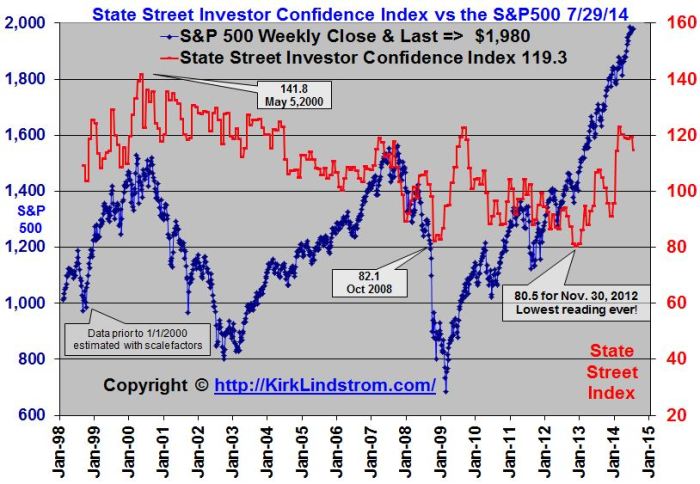
The renewable energy sub-sector within the broader energy market is experiencing one of the most significant positive shifts in sentiment today. This is largely due to recent policy announcements supporting green initiatives and technological advancements that are making renewable sources more cost-competitive. Conversely, certain segments of the retail sector, particularly those heavily reliant on discretionary spending, are witnessing a softening of sentiment as consumers become more budget-conscious.
Underlying Reasons for Differing Confidence Levels Between Sectors
The differing confidence levels between sectors are rooted in a variety of underlying reasons. Technology’s high confidence stems from its inherent scalability and its role in driving efficiency across all industries. Energy’s fluctuating confidence is a direct response to its sensitivity to global supply, demand, and geopolitical factors. Healthcare’s consistent confidence is due to its non-cyclical demand, meaning people need healthcare services regardless of economic conditions. The financial sector’s more reserved confidence is a consequence of its direct correlation with interest rates and the overall health of the economy, making it more susceptible to shifts in monetary policy and economic growth.
Economic Indicators and Their Influence
Economic indicators serve as the vital signs of a nation’s financial health, and today, they are playing a pivotal role in shaping market sentiment and investor confidence. Understanding these signals is crucial for interpreting market reactions and anticipating future trends.
Role of Today’s Economic Data Releases in Shaping Market Sentiment
Today’s economic data releases have been instrumental in shaping market sentiment, acting as crucial touchstones for investor expectations. A slightly cooler-than-anticipated inflation report has provided a significant boost to market sentiment, easing concerns about aggressive monetary tightening. Conversely, robust employment figures have reinforced the narrative of economic resilience, bolstering investor confidence in the short to medium term. Manufacturing surveys, when positive, signal underlying strength in industrial production, contributing to a more optimistic outlook.
How Inflation Reports, Employment Figures, and Manufacturing Surveys are Affecting Confidence
Inflation reports are directly affecting confidence by influencing expectations around interest rate policy. A higher-than-expected inflation number typically leads to increased caution and a potential dip in confidence, as it suggests a greater likelihood of further rate hikes. Conversely, a lower reading can be a significant confidence booster. Employment figures are also a major confidence driver; strong job creation numbers generally translate to higher confidence, indicating a healthy economy and robust consumer spending potential. Manufacturing surveys provide insight into the health of the industrial sector. Positive results suggest that businesses are expanding and investing, which boosts overall investor confidence.
Immediate Reactions of Markets to New Economic Announcements, Daily business news: Market Sentiment and Investor Confidence Today
Markets have demonstrated immediate and often pronounced reactions to new economic announcements today. For instance, upon the release of the latest inflation data, equity markets saw a swift upward movement as traders priced in a less hawkish stance from central banks. Similarly, currency markets reacted quickly to employment figures, with currencies of countries reporting strong job growth experiencing appreciation. These immediate reactions highlight the sensitivity of financial markets to economic data and the speed at which information is processed and acted upon.
Timeline of Key Economic Events and Their Corresponding Sentiment Shifts
Here’s a conceptual timeline illustrating the interplay between key economic events and sentiment shifts today:
- 08:00 AM (GMT): Release of Consumer Price Index (CPI) data. Initial reaction: Slight dip in equities as inflation remains elevated, but less than feared. Sentiment shifts from cautious to slightly more optimistic.
- 09:30 AM (GMT): Announcement of Non-Farm Payrolls. Immediate reaction: Significant rally in stock markets and strengthening of the domestic currency as job growth exceeds expectations. Sentiment shifts decisively towards positive.
- 11:00 AM (GMT): Publication of Purchasing Managers’ Index (PMI) for the manufacturing sector. Reaction: Modest gains in industrial stocks and commodity prices, reinforcing the positive sentiment driven by employment data.
Global Market Interconnections
In today’s interconnected world, the pulse of one major market resonates across the globe. Understanding these global market interconnections is essential for a holistic view of investor psychology and the flow of capital. Today, we observe how sentiment and confidence in one region are influencing others.
How Sentiment and Confidence in One Major Market Affect Others Globally
Sentiment and confidence in major economic powerhouses like the United States and China have a ripple effect worldwide. A surge in confidence in the US market, often driven by strong corporate earnings or positive economic data, tends to lift global markets. Investors worldwide see this as a sign of global economic health, leading to increased investment in other regions. Conversely, a significant downturn or uncertainty in a major market can trigger a global risk-off sentiment, causing investors to pull capital from emerging markets and seek safer havens.
Comparison of Prevailing Sentiment in North American, European, and Asian Markets
Today, the prevailing sentiment in North American markets is characterized by cautious optimism, as discussed earlier, with a focus on technological innovation and resilient consumer spending. European markets are exhibiting a more mixed sentiment, influenced by ongoing geopolitical concerns and the energy crisis, though recent data suggests a degree of stabilization. Asian markets, particularly those in East Asia, are showing a generally positive sentiment, driven by strong export performance and a recovery in domestic demand in some key economies.
Emerging Trends in Global Investor Psychology
Several emerging trends are shaping global investor psychology. There’s a growing emphasis on thematic investing, with investors seeking out long-term growth opportunities in areas like artificial intelligence, cybersecurity, and the transition to a green economy. Furthermore, there’s an increasing awareness of the interconnectedness of global supply chains and their impact on corporate profitability, leading to more scrutiny of companies’ operational resilience. A growing segment of investors is also prioritizing sustainability and ethical considerations in their investment decisions.
Influence of Geopolitical Events on Worldwide Market Sentiment
Geopolitical events continue to be a significant influencer of worldwide market sentiment. Today, ongoing diplomatic efforts to de-escalate tensions in Eastern Europe are providing a much-needed reprieve, reducing the immediate threat of further economic disruption and fostering a more positive global outlook. However, any resurgence of conflict or new geopolitical flashpoints would quickly inject uncertainty and risk aversion back into the markets, potentially leading to significant downward pressure on global equities and a flight to safe-haven assets.
Visualizing Market Sentiment and Investor Confidence: Daily Business News: Market Sentiment And Investor Confidence Today
Translating the abstract concepts of market sentiment and investor confidence into tangible visuals can offer powerful insights. Today, we explore how charts, graphics, and infographics can illuminate these crucial market dynamics, making them more accessible and understandable.
Descriptive Representation of a Chart for Today’s Market Sentiment Trends
Imagine a line graph where the horizontal axis represents time throughout the trading day, and the vertical axis represents a “Sentiment Score” ranging from -100 (extreme pessimism) to +100 (extreme optimism). Today, this line would likely show an initial dip in the early trading session as markets digested overnight news, followed by a steady climb as positive economic data emerged. It might then plateau or show minor fluctuations as traders weighed conflicting information, ultimately ending the day in a positive, albeit not overly exuberant, territory. The line would appear relatively smooth, indicating a measured rather than volatile shift in sentiment.
Elements of a Graphic Illustrating Fluctuating Investor Confidence
A graphic illustrating fluctuating investor confidence could feature a series of stacked bars. Each bar represents a trading period (e.g., hourly or daily). The height of the bar indicates the overall confidence level, perhaps on a scale of 1 to 10. Within each bar, different colored segments could represent the proportion of investors feeling highly confident, moderately confident, or uncertain. Arrows pointing up or down from the bars would visually signify the direction and magnitude of the confidence shift from the previous period. For example, a bar with a large green segment and an upward arrow would clearly depict a period of increasing high confidence.
Narrative of How a Heat Map Might Represent Sentiment Across Different Industries
Consider a heat map where the rows represent different economic sectors (e.g., Technology, Energy, Healthcare, Finance, Consumer Staples) and the columns represent different geographic regions (e.g., North America, Europe, Asia). Each cell would be colored according to a gradient from deep red (highly pessimistic) to vibrant green (highly optimistic). Today, the “Technology” row might be predominantly bright green, while the “Energy” row could show a mix of greens and yellows, reflecting its volatility. The “Financials” row might be a lighter shade of green or yellow, indicating moderate confidence, while sectors facing specific headwinds could be colored in shades of orange or red.
Conceptual Design for an Infographic Showcasing the Interplay of News, Sentiment, and Confidence
An infographic could be designed with a central “Market Sentiment” gauge, similar to a speedometer, indicating the overall mood. Flowing into this gauge from one side would be “News Headlines,” represented by distinct icons for economic data, corporate announcements, and geopolitical events. Arrows would connect these news icons to the sentiment gauge, showing how specific news types influence the reading. From the other side of the gauge, “Investor Confidence” would be depicted, perhaps as a rising or falling bar chart, illustrating the strength of conviction behind the prevailing sentiment. The infographic would visually demonstrate how news events trigger shifts in sentiment, which in turn affect the level of investor confidence, creating a dynamic and interconnected narrative.
Daily business news: Market Sentiment and Investor Confidence Today – Today’s market sentiment and investor confidence are bolstered by promising opportunities, echoing the forward-thinking strategies found in Online Business Ideas for Sustainable Digital Income in 2025. Embracing these innovative paths fuels optimism, contributing to a positive outlook on market sentiment and investor confidence.
Today’s market sentiment and investor confidence are buzzing with optimism! As businesses increasingly embrace globalization , opening doors to new opportunities and collaborative growth, we see this positive energy reflected in today’s daily business news, boosting confidence for all.