
 Elizabeth
Understanding Global Recession Risks
The global economic landscape is a complex tapestry, and understanding the subtle yet significant indicators of a potential recession is crucial for businesses and policymakers alike. These aren’t sudden storms, but rather shifts in the economic climate that, when observed together, paint a clearer picture of what lies ahead. By monitoring key signals, we can better prepare for and navigate the challenges that an economic downturn might bring.
Economists meticulously track several primary indicators that often signal an impending global recession. These include a sustained inversion of the yield curve, where short-term government bond yields become higher than long-term ones, suggesting investors anticipate future economic weakness. Declining manufacturing orders and inventory levels also point to reduced demand. Furthermore, a significant drop in consumer confidence, coupled with rising unemployment claims, indicates a weakening labor market and reduced household spending power. A contraction in leading economic indices, which aggregate various forward-looking economic factors, is another critical signal.
The historical context of major global recessions offers invaluable lessons. The Great Depression of the 1930s, for instance, was exacerbated by protectionist trade policies and a fragile banking system. The 2008 Global Financial Crisis was triggered by a housing market collapse and the subsequent implosion of complex financial instruments. More recently, the COVID-19 pandemic led to a sharp, albeit brief, global recession driven by unprecedented lockdowns and supply chain disruptions. Each of these events underscores how interconnected financial systems, consumer behavior, and policy responses can amplify or mitigate economic shocks.
The interconnectedness of global economies means that shocks rarely remain isolated. A downturn in one major economic bloc can quickly propagate through trade, investment, and financial markets to affect others. For example, a slowdown in China’s manufacturing sector can reduce demand for raw materials from countries like Australia and Brazil, and simultaneously impact the supply chains of companies worldwide that rely on Chinese components. Similarly, financial crises in one region can lead to capital flight, affecting currency values and credit availability globally.
When we look at recessionary pressures, a comparative overview between developed and emerging markets reveals distinct characteristics. Developed economies, with their mature financial systems and often higher levels of household debt, might experience significant impacts on consumer spending and asset values. Emerging markets, while sometimes more resilient due to younger demographics and less reliance on complex financial products, can be highly vulnerable to shifts in global commodity prices, foreign investment, and currency fluctuations. For instance, a sharp rise in interest rates in developed economies can lead to capital outflows from emerging markets, straining their economies.
Current Economic Outlook and Key Drivers
The present global economic landscape is characterized by a delicate balance of robust growth drivers and persistent headwinds. While many economies have shown remarkable resilience in the post-pandemic era, new challenges are emerging that require careful observation. Understanding these forces is key to navigating the path ahead and identifying opportunities amidst complexity.
The current global economic landscape is shaped by a mix of ongoing recovery trends and emerging pressures. Major growth drivers include continued technological innovation, a gradual normalization of consumer spending patterns after pandemic-induced shifts, and significant government investments in infrastructure and green initiatives in several key regions. However, potential headwinds are substantial, with persistent inflation, geopolitical tensions, and the lingering effects of supply chain disruptions posing significant challenges to sustained growth. The transition towards more sustainable energy sources also presents both opportunities and short-term economic adjustments.
The impact of inflation on consumer spending and business investment worldwide is a critical concern. Elevated inflation erodes the purchasing power of households, leading to a reduction in discretionary spending as consumers prioritize essential goods and services. For businesses, rising input costs can squeeze profit margins, making them hesitant to invest in new projects or expand operations. This can create a feedback loop where reduced demand further dampens business confidence and investment.
Central bank policies, particularly interest rate adjustments, play a pivotal role in shaping the economic outlook. As central banks raise interest rates to combat inflation, borrowing costs increase for consumers and businesses. This can slow down economic activity by discouraging spending and investment. Conversely, if inflation shows signs of abating, central banks might consider pausing or even reversing rate hikes, which could stimulate economic growth. The pace and magnitude of these policy shifts significantly influence market sentiment and economic trajectories.
Organizing a breakdown of economic performance by key geographical regions highlights the diverse nature of the current global situation. North America, for example, has shown resilience with a strong labor market, though inflation remains a concern. Europe is navigating energy security challenges and the ongoing impact of the conflict in Ukraine, leading to varied performance across member states. Asia, particularly in countries like India and parts of Southeast Asia, continues to be a significant engine of global growth, benefiting from domestic demand and a growing middle class, though some export-oriented economies face headwinds from slowing global demand.
Specific Recessionary Threats and Scenarios: Daily Business News: Global Recession Risks And Economic Outlook
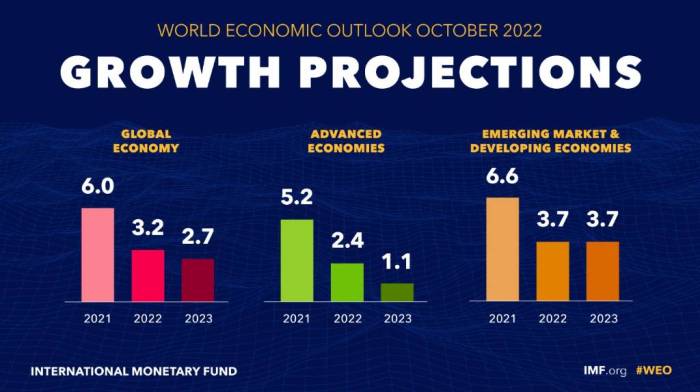
As we navigate the current economic climate, it’s important to acknowledge the specific threats that could tip the scales towards a recession. These aren’t abstract possibilities but tangible risks with demonstrable impacts on global stability and prosperity. Understanding these scenarios allows for more informed preparation and strategic decision-making.
The potential impact of geopolitical instability on global supply chains and economic stability cannot be overstated. Conflicts, trade wars, and political tensions can disrupt the flow of goods, raw materials, and energy, leading to price spikes and shortages. This can halt production lines, increase costs for businesses, and reduce the availability of essential products for consumers. The interconnectedness of the modern economy means that a localized conflict can have far-reaching consequences, creating uncertainty and dampening investment.
Elaborating on the risks associated with high levels of sovereign debt is also crucial. When governments accumulate substantial debt, there’s a greater risk of default or a need for austerity measures that can stifle economic growth. High debt levels can also lead to increased borrowing costs for the government, diverting funds that could otherwise be used for public services or investment. In extreme cases, sovereign debt crises can trigger broader financial instability, impacting banks and businesses that hold that debt.
Sharing scenarios for how energy price volatility could influence inflation and economic growth provides a clearer picture of potential economic shocks. Rapid increases in oil and gas prices, often driven by geopolitical events or supply constraints, directly feed into inflation by raising transportation and production costs across almost all sectors. This can lead to a significant reduction in consumer purchasing power and force businesses to cut back on investment and hiring. Conversely, a sharp decline in energy prices can provide a boost to economic activity by lowering costs for consumers and businesses, though it can also negatively impact energy-producing nations.
Comparing the potential effects of a shallow, short-lived downturn versus a deep, prolonged recession highlights the varying degrees of economic hardship. A shallow, short-lived downturn might involve a temporary dip in GDP, a modest increase in unemployment, and a quick recovery in consumer and business confidence. In contrast, a deep, prolonged recession could see significant job losses, widespread business failures, a prolonged period of low demand, and potentially long-lasting damage to economic potential. The former might be weathered with temporary adjustments, while the latter requires more robust and sustained recovery efforts.
Sector-Specific Impacts of Economic Slowdown
When the global economy experiences a slowdown, the effects are not felt uniformly across all industries. Different sectors possess varying degrees of resilience, relying on different demand drivers and operational structures. Understanding these sector-specific impacts is vital for businesses to adapt their strategies and for policymakers to implement targeted support.
An analysis of how different industries might be affected by a recession reveals varied vulnerabilities. The technology sector, often driven by discretionary spending and long-term investment cycles, might see a slowdown in new product adoption and a deferral of large-scale IT projects. Manufacturing, particularly for durable goods, is highly sensitive to consumer confidence and business investment, and could face reduced orders. The retail sector, especially non-essential goods, typically experiences a significant drop in sales as consumers tighten their belts.
The implications for the labor market during an economic slowdown are considerable. Potential job losses are a primary concern, as businesses facing reduced demand and tighter margins may resort to layoffs to cut costs. Wage stagnation or even reductions can also occur as the bargaining power of labor diminishes in a weaker job market. This can lead to a decrease in household income, further dampening consumer spending and creating a challenging environment for individuals and families.
Identifying sectors that may prove more resilient or even benefit from an economic downturn is also important. Essential services, such as healthcare, utilities, and basic food retail, tend to be less affected as demand for these products and services remains relatively stable regardless of economic conditions. Furthermore, sectors focused on cost-saving solutions or essential repairs might see increased demand. For example, companies offering energy efficiency upgrades or repair services for existing goods could find a growing market.
Designing a framework to assess the vulnerability of small and medium-sized enterprises (SMEs) to recessionary pressures is a critical undertaking. SMEs often have fewer financial reserves and less access to capital compared to larger corporations, making them more susceptible to cash flow problems. A framework could include evaluating their debt levels, dependency on specific customer segments, the nature of their operating costs, and their ability to adapt their business models. Analyzing these factors helps in identifying those most at risk and developing targeted support mechanisms.
Navigating Economic Uncertainty: Business Strategies
In times of economic uncertainty, a proactive and adaptable approach is not just beneficial; it’s essential for survival and eventual growth. Businesses that can effectively mitigate risks, optimize their operations, and maintain strong relationships are better positioned to weather storms and emerge stronger. This requires a strategic focus on core strengths and a willingness to innovate.
Strategies businesses can employ to mitigate risks during periods of economic uncertainty often revolve around building resilience and agility. This includes diversifying revenue streams to reduce reliance on a single market or product, strengthening balance sheets by managing debt prudently, and building cash reserves to provide a buffer against unexpected downturns. Developing robust contingency plans for various economic scenarios, from mild slowdowns to more severe recessions, is also a key risk mitigation tactic.
Elaborating on methods for optimizing operational efficiency and cost management is paramount. Businesses can conduct thorough reviews of their supply chains to identify areas for cost reduction, such as consolidating suppliers or negotiating better terms. Implementing lean management principles can help eliminate waste and improve productivity. Embracing technology for automation and process improvement can also lead to significant cost savings and enhanced efficiency, allowing businesses to do more with less.
Sharing best practices for maintaining strong customer relationships and market share involves a focus on value and communication. During tough times, customers appreciate businesses that are transparent about challenges and offer consistent value. This might mean adjusting product offerings, providing flexible payment options, or enhancing customer service to build loyalty. Proactive communication about how the business is adapting can help retain customer trust and confidence, which is invaluable during periods of economic flux.
Organizing a discussion on the importance of financial planning and liquidity management for businesses underscores their critical role. Strong financial planning involves realistic forecasting, scenario analysis, and careful budgeting. Liquidity management ensures that a business has enough cash on hand to meet its short-term obligations, such as payroll, rent, and supplier payments. This involves closely monitoring cash flow, managing receivables and payables effectively, and having access to credit lines if needed. A healthy cash position is often the difference between surviving a downturn and succumbing to it.
Visualizing Economic Data and Trends
Presenting complex economic data in an accessible and understandable format is crucial for informed decision-making. Visualizations transform raw numbers into compelling narratives, making it easier to grasp trends, identify correlations, and communicate insights effectively to a wide audience.
A descriptive visualization for a series of charts illustrating the trajectory of global GDP growth over the past decade would show a line graph with the x-axis representing time (years) and the y-axis representing percentage growth. The lines would depict the growth rates of major economies and the global average, highlighting periods of expansion and contraction. Annotations could mark significant global events, such as the COVID-19 pandemic, to illustrate their impact on growth trajectories. The overall visual would convey a story of recovery, periods of robust growth, and potential plateaus or declines.
Detailing the components of a visual representation showing the correlation between inflation rates and consumer confidence indices would involve a dual-axis chart. One axis would represent inflation rates (e.g., Consumer Price Index), and the other would show consumer confidence indices. Both would be plotted over the same time period. A clear inverse relationship would likely be visible: as inflation rises, consumer confidence tends to fall, and vice versa. Color-coding and clear labels would enhance readability.
Sharing an idea for a graphic that depicts the flow of international trade and its potential disruptions could be an animated map. The map would show major trade routes as pulsating lines connecting countries. Different colors could represent different types of goods (e.g., raw materials, manufactured goods, energy). Potential disruptions could be visualized as broken or faded lines, or areas of congestion marked with warning symbols, illustrating how geopolitical events or logistical bottlenecks can impact global trade flows.
Organizing the elements of a visual that compares unemployment rates across major economies would involve a bar chart or a series of small line graphs. The x-axis would represent different countries or regions, and the y-axis would show the unemployment rate percentage. Each bar or line would represent a specific country. This visual would allow for quick comparison of labor market health across different economic blocs, highlighting disparities and trends over time.
Expert Perspectives and Forecasts
The economic outlook is a subject of constant discussion among experts, with a wide range of opinions and predictions shaping our understanding of potential future scenarios. Engaging with these diverse perspectives, from mainstream forecasts to more unconventional viewpoints, provides a comprehensive picture of the challenges and opportunities that lie ahead. Understanding the methodologies behind these forecasts also adds valuable context.
A summary of differing expert opinions on the likelihood and timing of a global recession reveals a spectrum of views. Some economists anticipate a high probability of a recession within the next 12-18 months, citing persistent inflation and aggressive monetary tightening as key triggers. Others believe that while growth will slow, a full-blown recession might be avoided, pointing to resilient labor markets and strong consumer savings in some regions. The timing also varies, with some predicting an earlier onset and others a later one, potentially in late 2024 or 2025.
The range of economic growth forecasts from prominent international financial institutions, such as the International Monetary Fund (IMF) and the World Bank, generally indicates a slowdown in global growth compared to previous years. These forecasts often show moderate growth for developed economies and potentially stronger, though also slowing, growth for emerging markets. Specific figures are subject to revision based on incoming data and evolving global conditions, but the overarching trend suggests a more subdued economic environment.
Identifying key dissenting viewpoints or unconventional predictions adds depth to the economic discourse. Some analysts might argue that current inflation is more structural and persistent than mainstream models suggest, leading to a more prolonged period of economic pain. Others might present more optimistic scenarios, emphasizing the potential for rapid technological advancements to boost productivity and offset inflationary pressures, or highlighting the possibility of a surprisingly swift economic rebound driven by pent-up demand.
Elaborating on the methodologies used by forecasters to arrive at their projections reveals a blend of quantitative and qualitative approaches. Quantitative methods often involve econometric models that use historical data to predict future economic variables like GDP, inflation, and unemployment. These models are complex and rely on statistical relationships. Qualitative analysis involves expert judgment, considering current events, geopolitical developments, and policy announcements that might not be fully captured by historical data. Forecasters often combine these approaches, using models as a baseline and then adjusting them based on expert insights and real-time information.
Daily business news: Global Recession Risks and Economic Outlook – While global recession risks are a concern, understanding the evolving landscape of Daily business news: Technology Regulation and Policy Updates can reveal opportunities for innovation. By navigating these changes, businesses can strategically position themselves to thrive, ultimately contributing to a more robust economic outlook and mitigating potential downturns.
Navigating global recession risks and the economic outlook requires a keen understanding of prevailing economic trends. By staying informed and adaptable, we can harness these insights to foster resilience and pursue opportunities, ultimately shaping a brighter future despite the current challenges in daily business news.