
 Elizabeth
Navigating Corporate Transformations: Restructuring and Layoffs: Daily Business News: Corporate Restructuring And Layoff Announcements
In the dynamic world of business, change is not just constant; it’s often a catalyst for growth and resilience. Corporate restructuring and layoff announcements, while sometimes challenging, are often strategic maneuvers designed to steer companies toward a more stable and prosperous future. This exploration delves into the intricacies of these significant business events, offering insights into their purpose, impact, and the evolving landscape in which they occur.
Corporate restructuring involves a fundamental overhaul of a company’s operations, financial structure, or organizational framework. It’s a deliberate process aimed at improving efficiency, profitability, and long-term viability. Layoff announcements, while a difficult consequence of some restructuring efforts, are typically a component of a broader strategy to realign resources and adapt to changing market conditions. Understanding these processes is key to appreciating the complexities of modern business management.
Understanding Corporate Restructuring and Layoff Announcements
Corporate restructuring refers to the significant modification of a company’s business or financial components. This can involve divesting certain assets, merging with other entities, or fundamentally altering how the company operates to better align with market demands or strategic goals. It’s a proactive approach to ensure a company’s competitive edge and sustained success.
The reasons companies embark on restructuring initiatives are varied and often interconnected. They can include responding to declining market share, adapting to technological shifts, seeking cost efficiencies, or preparing for mergers and acquisitions. Essentially, companies restructure to remain agile and responsive in an ever-evolving economic environment.
Common types of corporate restructuring strategies encompass a range of actions. These might involve financial restructuring, such as debt renegotiation or recapitalization, or operational restructuring, which could mean streamlining processes, reorganizing departments, or divesting non-core business units. Strategic alliances and mergers also fall under the umbrella of restructuring, as they fundamentally alter a company’s structure and market position.
The primary drivers behind layoff announcements are often tied to the overarching restructuring goals. These can include reducing operational costs, eliminating redundant roles after a merger, or adapting to a downturn in a specific sector. It’s a measure taken when other avenues for efficiency or realignment have been explored or are insufficient to meet strategic objectives.
The immediate impact of restructuring on a company’s operations can be significant. It often involves a period of adjustment as new processes are implemented and roles are redefined. While the goal is to enhance efficiency, the transition phase can sometimes lead to temporary disruptions. However, a well-executed restructuring aims to minimize these impacts and pave the way for smoother, more effective operations in the long run.
Analyzing the Impact on Stakeholders, Daily business news: Corporate Restructuring and Layoff Announcements
The ripple effects of corporate restructuring and layoffs extend far beyond the company’s internal walls, touching all its stakeholders in profound ways.
For employees, restructuring and layoffs can bring about uncertainty, anxiety, and the potential loss of employment. Those who remain may face increased workloads and a need to adapt to new roles and responsibilities. Companies that handle these transitions with empathy and transparency can mitigate some of the negative emotional impact and foster a sense of continued loyalty among their workforce.
Investor confidence can be a delicate balance during periods of restructuring. While the announcement of a strategic overhaul might initially cause apprehension, a clear and compelling plan for future growth and profitability can ultimately bolster investor trust. Positive outcomes from the restructuring, such as improved financial performance, are crucial for regaining and maintaining investor confidence.
Customers’ perception of a brand can also be influenced by restructuring and layoff news. A company perceived as unstable or struggling might lead customers to question its long-term viability. Conversely, a well-communicated restructuring that signals a commitment to innovation and improved service can actually strengthen customer loyalty. Maintaining product quality and customer service standards throughout the transition is paramount.
Suppliers and business partners often experience indirect impacts. Changes in a company’s operational scale or strategic direction can affect order volumes, payment terms, or the nature of their collaboration. Strong relationships built on open communication and mutual understanding are vital for navigating these shifts smoothly, ensuring that these partnerships remain mutually beneficial.
Companies employ various strategies to manage stakeholder communication during these periods. This typically involves proactive and transparent engagement. Clear, consistent messaging through multiple channels—press releases, investor calls, employee town halls, and direct outreach to partners—is essential. The aim is to provide accurate information, address concerns, and Artikel the path forward, fostering trust and understanding across all stakeholder groups.
Trends and Patterns in Corporate Restructuring and Layoffs
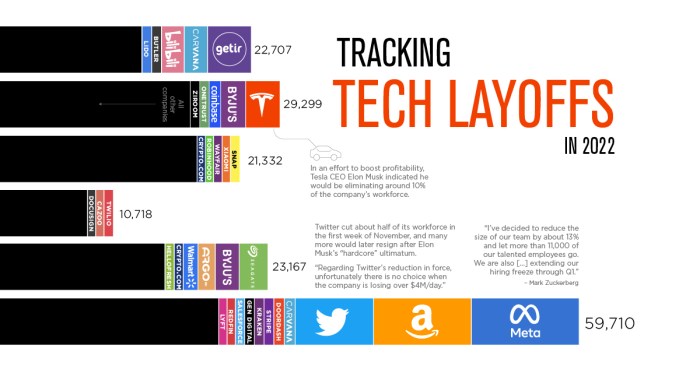
The landscape of corporate restructuring and layoffs is constantly evolving, shaped by economic forces, technological advancements, and shifting industry dynamics.
Emerging trends in corporate restructuring across different industries reveal a growing emphasis on agility and digital transformation. Companies are increasingly looking to restructure not just their finances but their entire business models to embrace new technologies and adapt to changing consumer behaviors. This often involves integrating artificial intelligence, automation, and data analytics into core operations.
There’s a discernible correlation between economic cycles and layoff announcements. During economic downturns, companies tend to be more proactive in cutting costs and streamlining operations, leading to an uptick in layoffs. Conversely, during periods of economic expansion, restructuring might focus more on growth-oriented strategies like mergers and acquisitions, with layoffs being less frequent.
Comparing historical patterns of restructuring with contemporary approaches highlights a shift towards more proactive and strategic interventions. Historically, restructuring might have been a reactive measure to a crisis. Today, it’s increasingly viewed as a continuous process of optimization and adaptation, driven by a desire to maintain a competitive advantage rather than simply survive.
Technological advancements are profoundly influencing restructuring decisions. Automation and AI are enabling companies to re-evaluate their workforce needs and operational efficiencies. This can lead to restructuring that focuses on upskilling existing employees, redeploying talent, or, in some cases, reducing headcount in areas where technology can perform tasks more effectively.
Data from the past decade demonstrates a notable frequency of restructuring and layoff events. For instance, following major economic disruptions like the 2008 financial crisis and the initial phases of the COVID-19 pandemic, there was a significant surge in both restructuring announcements and workforce reductions across various sectors. This pattern underscores the business world’s responsiveness to external shocks and the ongoing need for companies to recalibrate their strategies.
Case Studies of Corporate Restructuring and Layoff Announcements
Examining real-world examples provides invaluable lessons on navigating the complexities of corporate transformations.
A detailed case study of a successful corporate restructuring might involve a large retail company that, facing declining sales due to e-commerce competition, decided to divest its underperforming brick-and-mortar stores and heavily invest in its online platform. This involved significant operational changes, retraining staff for digital roles, and a strategic reallocation of capital. The outcome was a revitalized business model that met evolving consumer demands, leading to renewed profitability and market relevance.
An example of a company that navigated significant layoffs effectively could be a technology firm that underwent a major product pivot. Faced with a changing market, they announced a substantial reduction in force. However, they provided generous severance packages, outplacement services, and continued health benefits for an extended period. This empathetic approach helped departing employees transition more smoothly and maintained a degree of goodwill and respect from those who remained.
A scenario where restructuring led to unforeseen challenges might be a manufacturing company that, in an effort to cut costs, outsourced a significant portion of its production. While intended to improve margins, this led to quality control issues and longer lead times, alienating key customers and damaging the brand’s reputation. The company eventually had to re-evaluate its outsourcing strategy, incurring additional costs to rectify the situation.
Lessons learned from a notable layoff announcement often revolve around the importance of clear, honest communication and the human element. A company that, for example, announced layoffs via a generic email without any opportunity for personal interaction faced significant backlash. This highlighted that even during difficult decisions, maintaining dignity and providing direct, compassionate communication is crucial for preserving company reputation and employee morale.
A narrative capturing the journey of a company through a major restructuring could detail the initial strategic assessment, the difficult decision-making process, the implementation of new operational frameworks, and the subsequent recovery and growth. It would emphasize the leadership’s role in setting a clear vision, the challenges faced by employees during the transition, and the eventual realization of the restructuring’s intended benefits, showcasing resilience and adaptability.
Strategic Considerations for Companies Facing Restructuring
Successfully navigating corporate restructuring requires careful planning, ethical execution, and a deep understanding of its multifaceted impact.
A robust framework for assessing the necessity of corporate restructuring begins with a comprehensive analysis of market position, financial health, operational efficiency, and competitive landscape. Key performance indicators, customer feedback, and industry benchmarks serve as crucial data points. This assessment should objectively determine if restructuring is the most viable path to achieving strategic objectives or if alternative solutions exist.
Best practices for planning and executing layoffs prioritize fairness, transparency, and support. This includes clearly defining the criteria for selection, ensuring legal compliance, and preparing a detailed communication plan. Providing adequate notice, fair severance packages, and outplacement services are essential components of a responsible layoff process.
Maintaining employee morale during periods of uncertainty is a significant challenge. Companies can employ several methods, including fostering a culture of open communication, providing regular updates on the restructuring process, recognizing and rewarding the contributions of remaining staff, and investing in training and development opportunities to help employees adapt to new roles and responsibilities.
The importance of transparent communication during restructuring cannot be overstated. It builds trust, reduces anxiety, and ensures that all stakeholders have a clear understanding of the company’s direction and rationale behind its decisions. This involves being honest about challenges, sharing the vision for the future, and providing opportunities for questions and feedback.
A set of guiding principles for ethical decision-making in restructuring should include fairness, respect, and accountability. Decisions should be based on objective business needs, not personal biases. The well-being of employees should be considered, and companies should strive to minimize harm and provide support. Transparency and honesty in all communications are fundamental ethical obligations.
Future Outlook and Predictive Factors
The trajectory of corporate restructuring and layoffs is intrinsically linked to broader economic, technological, and global forces.
Predicting potential future trends in corporate restructuring based on current economic indicators suggests a continued focus on digital transformation and sustainability. As inflation persists and global supply chains remain volatile, companies may increasingly restructure to enhance resilience, diversify sourcing, and invest in technologies that improve efficiency and reduce environmental impact.
Identifying early warning signs that might precede widespread layoff announcements involves monitoring key economic indicators such as declining consumer spending, rising interest rates, and increasing unemployment figures. Internally, companies might show signs like hiring freezes, reduced capital expenditures, and a noticeable slowdown in new project initiatives, all signaling potential cost-cutting measures ahead.
The role of innovation in mitigating the need for extensive restructuring is significant. Companies that continuously invest in research and development, embrace new technologies, and foster an innovative culture are better positioned to adapt to market changes without drastic overhauls. Innovation can lead to new products, more efficient processes, and new revenue streams, proactively addressing potential challenges.
Global events, such as geopolitical tensions, pandemics, and climate change impacts, will undoubtedly shape future restructuring strategies. Companies will likely need to build greater adaptability into their structures, potentially diversifying operations across different regions, investing in supply chain resilience, and developing contingency plans for unforeseen disruptions.
A discussion on the long-term societal implications of frequent corporate restructuring points to potential shifts in the labor market and employee expectations. While restructuring can lead to more efficient and competitive businesses, it also raises questions about job security, the need for continuous reskilling, and the social safety nets required to support workers through frequent transitions. The emphasis will likely shift towards fostering lifelong learning and adaptable career paths.
Daily business news: Corporate Restructuring and Layoff Announcements – Even as corporate restructuring and layoff announcements shape the business landscape, it’s inspiring to see how individuals navigate these shifts. Understanding how Daily business news: Retail Investors React to Market Volatility highlights resilience and adaptation. This spirit empowers us all as we continue to adapt to the evolving world of corporate restructuring and layoff announcements.
While daily business news often highlights corporate restructuring and layoff announcements, understanding the underlying economic currents like inflation provides crucial context. These shifts in the business landscape, even when challenging, can pave the way for leaner, more resilient companies emerging from periods of economic adjustment.