
 Elizabeth
Understanding Retail Investor Sentiment Amidst Market Swings
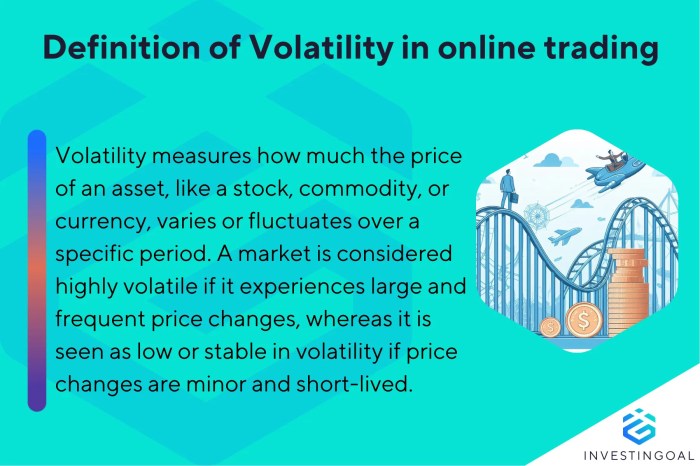
Market volatility can be a challenging environment, often evoking a range of emotions in retail investors. Navigating these periods requires a keen understanding of the psychological underpinnings that drive decision-making when markets are on the move.
Emotional Responses to Market Swings, Daily business news: Retail Investors React to Market Volatility
During periods of high market volatility, retail investors commonly experience a spectrum of emotions. Fear often takes center stage, leading to a desire to protect capital by selling positions, sometimes impulsively. Conversely, excitement and greed can emerge during upward swings, tempting investors to chase gains without sufficient due diligence. Anxiety is also a frequent companion, fueled by uncertainty about future market direction and the potential impact on personal financial goals. This emotional rollercoaster can cloud judgment, making rational investment decisions more difficult.
Psychological Biases Influencing Decisions
Several psychological biases can significantly influence retail investor decisions when markets are unstable. Confirmation bias, for instance, leads investors to seek out information that supports their existing beliefs, potentially ignoring warning signs. The herd mentality, or social proof, can cause individuals to follow the actions of a larger group, even if those actions are not in their best interest. Loss aversion, the tendency to feel the pain of a loss more strongly than the pleasure of an equivalent gain, can prompt premature selling to avoid further downside. Availability heuristic might cause investors to overemphasize recent, dramatic events when making decisions, neglecting long-term trends.
Perceptions of Experienced vs. Novice Investors
The way experienced retail investors and novices perceive and react to market fluctuations often differs significantly. Novice investors, with less exposure to market cycles, may be more prone to panic during downturns or get overly enthusiastic during rallies. They might view volatility as a purely negative event. Experienced investors, on the other hand, often develop a more nuanced perspective. They may see volatility as an inherent part of investing and even an opportunity to buy assets at lower prices. Their reactions are typically more measured, guided by a longer-term outlook and a greater understanding of risk management.
The Role of News Cycles and Social Media
News cycles and social media play a crucial role in amplifying retail investor reactions to volatility. The constant stream of information, often sensationalized, can create a sense of urgency and influence sentiment rapidly. Headlines emphasizing market drops can trigger widespread fear, while positive news can fuel speculative buying. Social media platforms, in particular, can create echo chambers where certain narratives gain traction, leading to collective action among retail investors, sometimes independent of fundamental market drivers. This amplification effect can contribute to increased trading volumes and sharper price movements.
Identifying Key Drivers of Retail Investor Behavior in Volatile Markets
Understanding what prompts retail investors to act during turbulent times is crucial for comprehending market dynamics. A confluence of economic signals, specific market events, company news, and technological influences shapes these behaviors.
Economic Indicators Triggering Reactions
Several key economic indicators consistently trigger significant reactions from retail investors. Inflation rates, particularly when rising unexpectedly, often signal potential interest rate hikes, which can dampen stock market sentiment. Unemployment figures, especially concerning spikes, can indicate broader economic weakness, leading to investor caution. Interest rate decisions by central banks are paramount; announcements of rate hikes typically lead to sell-offs, while cuts can stimulate buying. Consumer confidence surveys also play a role, reflecting the general mood and spending intentions of the populace, which directly impacts corporate revenues and stock valuations.
Impact of Specific Market Events
Specific market events have a documented impact on retail trading volumes. For example, significant interest rate hikes announced by major central banks, like the US Federal Reserve, have historically correlated with increased selling pressure and a decline in retail participation in riskier assets. Geopolitical news, such as the outbreak of conflicts or major trade disputes, can create widespread uncertainty, leading to a surge in trading activity as investors attempt to rebalance portfolios or seek safe-haven assets. Unexpected economic data releases, like a sharp contraction in GDP, can also lead to immediate and substantial shifts in retail trading behavior.
Influence of Company-Specific News
Company-specific news significantly influences retail investor sentiment within a volatile market context. Earnings reports are a prime example; a surprisingly positive report can boost a stock even in a down market, while a disappointing one can exacerbate declines. Product launches, especially for technology or consumer goods companies, can generate excitement or concern among retail investors, impacting their willingness to invest. Management changes, mergers, or acquisitions also create ripples, prompting retail investors to reassess the future prospects of affected companies.
Impact of Algorithmic and High-Frequency Trading
Algorithmic trading and high-frequency trading (HFT) can profoundly impact retail investor perception of market stability. The speed and sophistication of these automated trading systems can lead to rapid price movements that may appear erratic to individual investors. This can foster a sense of the market being unpredictable or even manipulated, potentially increasing retail investors’ anxiety and leading them to make more reactive decisions. The efficiency with which algorithms can exploit small price discrepancies can also create a perception of an uneven playing field, affecting retail investors’ confidence.
Strategies Retail Investors Employ During Market Instability
When faced with the inherent uncertainties of market turbulence, retail investors adopt a variety of strategies to protect their capital and potentially capitalize on opportunities. These approaches range from systematic investment plans to proactive risk management.
Common Investment Strategies in Turbulence
Retail investors commonly employ several investment strategies when navigating market turbulence. A popular approach is diversification, spreading investments across different asset classes, sectors, and geographies to reduce overall risk. Dollar-cost averaging is another widely used method, involving investing a fixed amount of money at regular intervals, regardless of market conditions. Value investing, focusing on undervalued assets with strong fundamentals, can be attractive during downturns. Some investors also engage in defensive investing, shifting towards assets perceived as safer, such as bonds or dividend-paying stocks.
Utilizing Dollar-Cost Averaging
Dollar-cost averaging (DCA) is a powerful strategy for retail investors to navigate volatile periods by systematically reducing the impact of market timing. By investing a predetermined sum of money at regular intervals, investors buy more shares when prices are low and fewer shares when prices are high. This averaging effect can lead to a lower average cost per share over time. For instance, an investor committed to investing $100 every month would naturally purchase more units of a stock when its price drops to $10 per share (10 units) compared to when it rises to $20 per share (5 units). This disciplined approach removes emotional decision-making from the investment process.
Risk Management Techniques
Effective risk management is paramount for retail investors during periods of market instability. One common technique is setting stop-loss orders. These are pre-set instructions to sell a security when it reaches a certain price, limiting potential losses on a particular investment. Another approach is position sizing, ensuring that no single investment represents an overly large portion of the overall portfolio, thereby mitigating the impact of any individual investment’s poor performance. Rebalancing the portfolio periodically to maintain a target asset allocation also helps manage risk by selling assets that have grown disproportionately and buying those that have lagged.
Defensive Versus Opportunistic Approaches
Retail investors often adopt either a defensive or an opportunistic approach during market downturns. A defensive approach prioritizes capital preservation. This might involve shifting a larger portion of the portfolio into cash or low-risk assets like government bonds, and focusing on dividend-paying stocks with stable earnings. An opportunistic approach, conversely, views downturns as a chance to acquire assets at discounted prices. Investors employing this strategy might increase their allocation to equities, seeking out quality companies that have been unfairly punished by market sentiment, with the expectation of long-term recovery and growth.
The Role of Financial News in Shaping Retail Investor Perceptions
The way financial news is presented significantly influences how retail investors perceive market volatility and subsequently make investment decisions. The framing of headlines, the type of reporting, and the very act of news dissemination can create powerful feedback loops.
How Framing Influences Outlook
The framing of financial news articles can profoundly influence a retail investor’s outlook on market volatility. An article focusing on the potential downside of a market drop, using words like “crash” or “crisis,” is likely to instill fear and encourage selling. Conversely, an article that highlights the potential for recovery and opportunity, using phrases like “buying opportunity” or “resilient markets,” might encourage a more optimistic or even aggressive investment stance. The emphasis on specific data points or expert opinions can also shape perception, leading investors to focus on certain aspects of the market while overlooking others.
Hypothetical Scenario of Headline Impact
Consider a hypothetical scenario where a major financial publication runs a headline: “Tech Stocks Plummet Amidst Rising Interest Rates.” A retail investor, seeing this, might immediately feel a sense of urgency. If this investor holds several technology stocks, they might interpret the headline as a direct warning and decide to sell their holdings quickly to avoid further losses, regardless of the individual performance or long-term prospects of those specific companies. This action, multiplied across many retail investors, can contribute to further downward pressure on tech stocks, thus validating the initial headline.
Financial Reporting That Resonates
During uncertain times, certain types of financial reporting are most likely to resonate with and affect retail investors. Analysis of market trends that breaks down complex information into understandable insights is highly valued. Company-specific news that provides clear rationale for stock movements, such as detailed earnings call summaries or analyst upgrades/downgrades, is also impactful. Educational content that explains market mechanisms or investment strategies in simple terms can empower retail investors. Conversely, overly technical jargon or sensationalized, fear-mongering headlines tend to be less constructive and more likely to lead to impulsive decisions.
Potential for News to Create Feedback Loops
Financial news has the potential to create a powerful feedback loop that influences retail investor sentiment and subsequent market movements. When news outlets report on increased retail selling due to negative sentiment, this reporting itself can reinforce that negative sentiment among other retail investors, leading to more selling. Conversely, positive news about retail investor optimism or a market rebound can encourage more buying. This dynamic means that media coverage can not only reflect market sentiment but also actively shape it, creating self-fulfilling prophecies in both upward and downward market trends.
Illustrating Retail Investor Reactions with Data and Scenarios: Daily Business News: Retail Investors React To Market Volatility
Visualizing retail investor reactions through data and relatable scenarios offers a clearer picture of their behavior during market swings. Understanding these patterns helps in grasping the tangible effects of volatility on individual investment choices.
Table Structure for Volatility and Trading Activity
To display the correlation between market volatility indices and retail trading activity, a structured HTML table can be employed.
| Date | Volatility Index (e.g., VIX) | Retail Trading Volume (Millions of Shares) | Market Direction (e.g., Up/Down) | Asset Class Focus (e.g., Tech, Energy) |
|---|---|---|---|---|
| [Insert Specific Date] | [Insert VIX Value] | [Insert Volume Data] | [Insert Direction] | [Insert Asset Class] |
| [Insert Another Date] | [Insert VIX Value] | [Insert Volume Data] | [Insert Direction] | [Insert Asset Class] |
This table structure allows for direct comparison of volatility levels with actual trading volumes and the prevailing market sentiment or focus of retail investors on specific dates.
Scenario of a Sudden Market Drop
Imagine a scenario where the market experiences a sudden 5% drop in a single trading day due to unexpected inflation data. A group of retail investors, let’s call them “The Weekend Warriors,” who typically check their portfolios on Fridays, might react with immediate concern. Some, driven by fear of further losses, might rush to place sell orders, aiming to cut their losses before the market closes or over the weekend. Others, perhaps having learned about dollar-cost averaging, might see this as a buying opportunity and allocate a portion of their available cash to purchase stocks they believe are now undervalued. A few might do nothing, opting to wait for more information and avoid impulsive decisions, reflecting a more experienced or cautious approach.
Typical Retail Investor Questions During Volatility
When evaluating their portfolios during volatile periods, retail investors commonly ask themselves a series of questions:
- Is this a temporary dip, or the start of a prolonged downturn?
- Should I sell now to prevent further losses, or hold on and hope for a recovery?
- Are my current holdings still aligned with my long-term financial goals?
- Are there any undervalued assets I can buy at a discount right now?
- Is my portfolio diversified enough to withstand this kind of market shock?
- What is the news telling me, and can I trust it?
- Should I adjust my risk tolerance based on current market conditions?
Observable Patterns in Trading Volumes
Following major market news, observable patterns emerge in trading volumes for specific asset classes. For instance, after a significant announcement of a new technological breakthrough or a major product launch by a prominent tech company, trading volumes for technology stocks often surge, reflecting increased retail investor interest and speculation. Conversely, following news of geopolitical instability or a sudden spike in energy prices, trading volumes in energy stocks or safe-haven assets like gold might see a noticeable uptick, as retail investors reallocate their portfolios in response to perceived risks and opportunities.
Daily business news: Retail Investors React to Market Volatility – Even as retail investors navigate market volatility with resilience, the landscape is rapidly evolving thanks to exciting Daily business news: Fintech Innovations Disrupting Financial Services. These advancements empower individuals, helping retail investors adapt and thrive amidst market fluctuations, fostering greater confidence in their investment journeys.
As retail investors navigate market volatility, they’re increasingly leveraging accessible digital platforms for insights and trading. These tools empower individuals to make informed decisions, fostering resilience and opportunity amidst fluctuating daily business news, proving that smart engagement can lead to positive outcomes.