
 Elizabeth
Understanding Climate Risk in Financial Markets
The financial world is no longer viewing climate change as a distant environmental issue. It’s now recognized as a significant driver of financial risk, impacting everything from company valuations to global economic stability. This shift is prompting a deeper dive into how climate-related factors can influence investment decisions and market dynamics.
Climate risk, in essence, refers to the potential for financial losses arising from climate change. This broad concept can be broken down into several key categories that are crucial for businesses and investors to understand. The financial markets are increasingly scrutinizing these factors because the evidence of their impact is becoming undeniable, affecting asset values, operational continuity, and long-term profitability.
The Core Concepts of Climate Risk in Finance
At its heart, climate risk in financial markets is about identifying and quantifying potential financial impacts stemming from changes in the climate. This isn’t just about a single storm; it’s about the systemic shifts and increased volatility that a changing climate introduces. Understanding these risks is paramount for making informed financial decisions and building resilient portfolios.
Key Categories of Climate Risk
There are two primary categories of climate risk that are particularly relevant to businesses and investments: physical risks and transition risks. Physical risks are direct consequences of climate change, such as extreme weather events. Transition risks, on the other hand, arise from the shift towards a lower-carbon economy, including policy changes, technological advancements, and evolving market preferences. Both have profound implications for financial performance.
Why Financial Markets Are Scrutinizing Climate Factors
The heightened focus on climate risk within financial markets is a natural response to growing evidence of its tangible economic consequences. Investors and financial institutions are recognizing that ignoring these factors can lead to significant financial underperformance and unforeseen losses. This scrutiny is driven by a desire for greater transparency, better risk management, and the identification of new opportunities in a changing world.
Physical Climate Risks and Their Financial Manifestations
The tangible effects of climate change are increasingly translating into direct financial impacts on businesses. Extreme weather events, such as hurricanes, floods, droughts, and wildfires, are becoming more frequent and intense, causing widespread damage to physical assets, disrupting supply chains, and leading to significant operational downtime. These events directly hit a company’s bottom line through repair costs, lost revenue, and increased insurance premiums.
Impact of Extreme Weather on Businesses
When a severe storm hits, businesses can face immediate and substantial financial losses. For instance, a manufacturing plant damaged by flooding might require millions in repairs, halt production for weeks or months, and lose crucial contracts due to delivery delays. Similarly, a wildfire can destroy agricultural land, impacting crop yields and the livelihoods of farmers, which in turn affects food supply chains and commodity prices.
Rising Sea Levels and Real Estate Investments
The gradual yet persistent rise in sea levels poses a significant threat to coastal real estate and infrastructure. Properties in low-lying areas are becoming increasingly vulnerable to inundation and storm surges, leading to potential devaluation, increased insurance costs, and even the eventual uninsurability of these assets. Investments in coastal infrastructure, such as ports and transportation networks, also face considerable risks of damage and operational disruption, requiring costly adaptation measures or facing obsolescence.
Changing Agricultural Yields and Commodity Markets, Daily business news: Climate Risk and Its Financial Market Impact
Shifting weather patterns and increased frequency of extreme events are altering agricultural productivity across the globe. Some regions may experience declining crop yields due to prolonged droughts or excessive rainfall, while others might see new opportunities. These changes directly impact commodity markets, leading to price volatility for essential goods like grains, coffee, and cotton. Businesses reliant on these commodities, from food processors to apparel manufacturers, must contend with fluctuating input costs and potential supply shortages.
Resource Scarcity and Financial Consequences
Climate change exacerbates resource scarcity, particularly concerning water and arable land. Regions facing prolonged droughts or desertification will experience increased competition for these vital resources. This scarcity can drive up the costs of raw materials, impact industrial processes that rely on water, and even lead to social and political instability, all of which have significant financial implications for businesses operating in or sourcing from these areas.
Transition Climate Risks and Economic Shifts
The global effort to mitigate climate change is driving a fundamental economic transition, and this shift brings its own set of financial risks and opportunities. As policies and regulations evolve to encourage decarbonization, businesses must adapt to new operating environments. This transition isn’t just about environmental compliance; it’s about navigating a rapidly changing economic landscape that rewards innovation and sustainability.
Financial Implications of Climate Policy Changes
Governments worldwide are implementing policies such as carbon taxes, emissions trading schemes, and stricter environmental regulations. These measures can significantly increase the operating costs for carbon-intensive industries, making their products and services more expensive. Companies that fail to adapt or invest in cleaner alternatives risk losing market share and facing reduced profitability. Conversely, businesses that proactively embrace these changes can gain a competitive advantage.
Technological Advancements and Industry Disruption
The rapid development of green technologies, such as renewable energy (solar, wind), electric vehicles, and carbon capture, is reshaping industries. These advancements create significant investment opportunities in new sectors but also pose a threat to established industries reliant on fossil fuels. Companies that are slow to adopt or invest in these emerging technologies risk being disrupted and left behind. The energy sector, automotive industry, and manufacturing are all undergoing profound transformations driven by these innovations.
Evolving Consumer Preferences and Company Valuations
Consumers are increasingly making purchasing decisions based on environmental and social impact. There’s a growing demand for sustainable products and services, and a willingness to support companies that demonstrate strong environmental credentials. This shift in consumer preference can directly impact company valuations. Businesses with strong sustainability profiles may see increased brand loyalty and higher market valuations, while those perceived as environmentally irresponsible may face reputational damage and declining sales.
Stranded Assets in Carbon-Intensive Sectors
A critical financial risk associated with the transition to a low-carbon economy is the concept of “stranded assets.” These are assets, such as fossil fuel reserves, coal-fired power plants, or carbon-intensive infrastructure, that may lose their economic value prematurely due to climate policies, technological shifts, or market sentiment. Investors holding these assets face the risk of significant write-downs and losses as the world moves away from carbon-intensive activities.
Financial Market Reactions and Investor Behavior
The financial markets are actively responding to the growing understanding of climate risk. Investors and financial institutions are no longer treating climate considerations as an afterthought but are integrating them into their core investment strategies and risk management frameworks. This proactive approach is driven by a recognition that climate-related factors can significantly impact financial performance and long-term portfolio stability.
Incorporating Climate Risk into Investment Decisions
Market participants are increasingly using sophisticated analytical tools and data to assess how physical and transition climate risks might affect the value of their investments. This involves looking beyond traditional financial metrics to understand a company’s exposure to climate-related events, its carbon footprint, and its strategies for adapting to a changing climate. Investment portfolios are being re-evaluated to reduce exposure to high-risk assets and increase investment in climate-resilient and sustainable businesses.
Climate Stress Tests by Financial Institutions
To better understand their vulnerabilities, many financial institutions are conducting climate stress tests. These exercises simulate the potential financial impact of various climate scenarios, such as a sudden increase in carbon prices or a series of severe weather events. By stress-testing their portfolios, banks and asset managers can identify areas of potential weakness, quantify potential losses, and develop strategies to enhance their resilience.
The Role of ESG Factors in Climate Investment
ESG (Environmental, Social, and Governance) factors have become central to investment analysis, particularly concerning climate risk. Environmental factors, such as a company’s greenhouse gas emissions, water usage, and waste management practices, are directly indicative of its climate risk exposure. Strong governance, including transparent reporting and effective board oversight of climate issues, is also crucial for building investor confidence. Investors are increasingly favoring companies with high ESG scores, viewing them as better managed and more sustainable in the long term.
Financial Instruments for Climate Resilience
A growing array of financial instruments is being developed and utilized to manage or invest in climate resilience. These include:
- Green bonds: Debt instruments issued to finance environmentally friendly projects.
- Climate-focused exchange-traded funds (ETFs): Funds that invest in companies involved in renewable energy, energy efficiency, or other climate solutions.
- Catastrophe bonds: Insurance-linked securities that transfer risk from insurers to investors, often triggered by natural disasters.
- Sustainability-linked loans: Loans where the interest rate is tied to the borrower achieving specific sustainability performance targets.
- Carbon credits: Tradable permits that allow companies to emit a certain amount of carbon dioxide, used to incentivize emissions reductions.
These instruments provide mechanisms for capital to flow towards climate solutions and for investors to hedge against climate-related financial exposures.
Business Strategies for Climate Risk Management
Businesses that proactively manage climate risk are better positioned to thrive in the face of evolving environmental and economic challenges. Adopting a strategic approach to climate risk is not just about mitigating potential losses; it’s also about uncovering new opportunities and building a more resilient and competitive enterprise. This requires a forward-thinking mindset that integrates climate considerations into the very fabric of business operations and financial planning.
Adapting to Physical Climate Risks
Businesses can take several proactive measures to adapt to the impacts of physical climate risks. This includes investing in climate-resilient infrastructure, such as reinforcing buildings against extreme weather, relocating critical assets away from vulnerable areas, and enhancing water management systems. Diversifying supply chains to reduce reliance on single geographic regions prone to climate impacts is also a crucial strategy. For example, a food company might invest in drought-resistant crops or establish sourcing partnerships in multiple climate zones.
Benefiting from the Transition to a Low-Carbon Economy
Companies can strategically position themselves to benefit from the global shift towards a low-carbon economy. This involves investing in renewable energy sources for their operations, improving energy efficiency, and developing products or services that cater to the growing demand for sustainable solutions. For instance, a transportation company might invest heavily in electric vehicle fleets, or a construction firm could specialize in green building materials and techniques. Innovation in this space can unlock new markets and revenue streams.
Integrating Climate Risk Assessment into Financial Planning
Effective climate risk management requires integrating these assessments into corporate financial planning processes. This means going beyond traditional financial forecasting to include scenarios that account for potential climate impacts. Businesses should quantify the potential financial implications of both physical and transition risks on their revenues, costs, and capital expenditures. This integration helps in making more informed investment decisions and allocating capital effectively towards resilience and sustainability initiatives.
Disclosing Climate-Related Financial Exposures
Transparency in disclosing climate-related financial exposures is becoming increasingly important for stakeholders, including investors, regulators, and customers. Companies should develop a clear framework for assessing and reporting these risks. This includes identifying key climate-related financial risks, quantifying their potential impact, and outlining the strategies being implemented to manage them. A well-structured disclosure can enhance investor confidence and demonstrate a company’s commitment to responsible business practices.
A Framework for Climate Risk Disclosure
A robust disclosure framework for climate-related financial exposures should cover the following key areas:
- Identification of material climate risks (physical and transition).
- Assessment of the potential financial impact of these risks on the company’s operations, supply chain, and market position.
- Description of mitigation and adaptation strategies being implemented.
- Quantification of financial metrics related to climate risk exposure and management.
This structured approach ensures that stakeholders receive comprehensive and actionable information about a company’s climate resilience.
Data and Disclosure in Climate Risk Assessment
Accurate and standardized data is the bedrock of effective climate risk assessment in financial markets. Without reliable information, it’s challenging for investors, lenders, and insurers to make informed decisions about where to allocate capital and how to price risk. The demand for high-quality climate data is growing, driving advancements in its collection, analysis, and reporting.
Types of Data Required for Climate Risk Assessment
Financial markets require a diverse range of data to assess climate risk accurately. This includes:
- Physical climate data: Historical weather patterns, projections of future climate scenarios (temperature, precipitation, sea-level rise), and data on extreme weather event frequency and intensity.
- Emissions data: Greenhouse gas emissions across Scope 1 (direct), Scope 2 (indirect from purchased energy), and Scope 3 (value chain) for companies.
- Asset-level data: Information on the location and vulnerability of physical assets to climate impacts.
- Transition-related data: Information on a company’s energy sources, investments in low-carbon technologies, policy engagement, and adaptation strategies.
- Societal and economic data: Data on water stress, land use changes, and demographic shifts influenced by climate.
This data helps in quantifying both the potential for physical damage and the risks associated with the transition to a low-carbon economy.
Challenges and Advancements in Climate Data
Collecting and standardizing climate data presents significant challenges. Data can be inconsistent across different regions and reporting entities, making direct comparisons difficult. Furthermore, projecting future climate impacts with high precision remains an ongoing scientific endeavor. However, advancements are being made through the development of sophisticated climate modeling, the use of satellite imagery and remote sensing technologies, and the establishment of industry-led initiatives to promote data standardization and quality.
Current Disclosure Frameworks for Climate Information
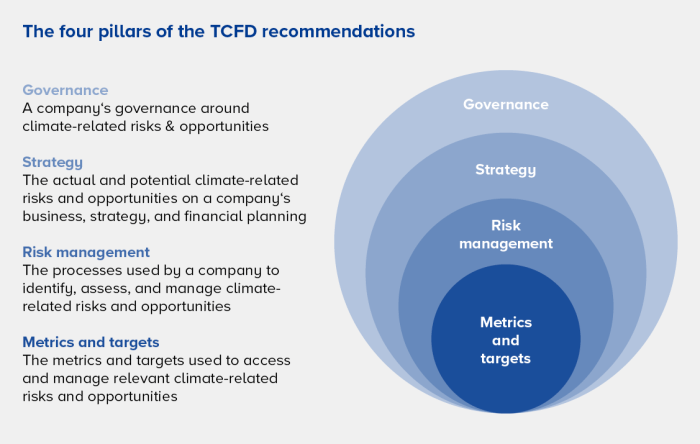
Several frameworks are guiding companies in disclosing their climate-related financial information. The Task Force on Climate-related Financial Disclosures (TCFD) is one of the most influential, recommending disclosures across four pillars: Governance, Strategy, Risk Management, and Metrics and Targets. Other initiatives, such as those from the International Sustainability Standards Board (ISSB), are working towards creating globally consistent sustainability disclosure standards, which will include climate-related information.
Sample Climate Risk Impact Report Structure
To illustrate how climate risk impacts can be disclosed, consider the following sample report structure, focusing on key metrics:
| Climate Risk Category | Potential Financial Impact | Mitigation Strategy | Financial Metric |
|---|---|---|---|
| Physical (e.g., Increased Flood Frequency in Coastal Operations) | Asset damage to manufacturing facilities, disruption of inbound logistics, increased insurance premiums. | Investment in flood defenses, diversification of key supplier locations, review of insurance coverage. | Estimated asset impairment value: $15M (over 5 years); Projected operating expense increase: 5% annually due to insurance. |
| Transition (e.g., Introduction of a Carbon Tax on Industrial Emissions) | Higher energy costs for production processes, potential reduction in demand for higher-priced goods, increased compliance costs. | Transition to renewable energy sources for operations, investment in energy efficiency technologies, development of lower-carbon product alternatives. | Projected operating expense increase: 8% in the first year of tax implementation; Potential revenue reduction: 3-5% due to price elasticity. |
| Physical (e.g., Prolonged Drought Affecting Water Availability for Agriculture) | Reduced crop yields for key raw materials, increased raw material procurement costs, potential supply chain instability. | Investment in water-efficient farming technologies with key suppliers, exploration of alternative sourcing regions, development of drought-resistant crop varieties. | Estimated impact on cost of goods sold: +7% for key agricultural inputs; Risk of supply disruption impacting production capacity by 10%. |
Emerging Trends and Future Outlook: Daily Business News: Climate Risk And Its Financial Market Impact
The landscape of climate risk in financial markets is continuously evolving, driven by scientific understanding, policy developments, and market innovation. We are witnessing the emergence of new financial products and services designed to address climate-related challenges, and the regulatory environment is becoming increasingly sophisticated. These trends point towards a future where climate considerations are deeply embedded in global financial decision-making.
Potential for New Financial Products and Services
The growing awareness of climate risk is spurring innovation in financial products and services. We can expect to see a surge in offerings like specialized climate insurance for businesses, innovative investment funds focused on climate adaptation technologies, and new forms of securitization for climate resilience projects. Furthermore, the development of advanced climate analytics platforms and advisory services will become increasingly crucial for businesses and investors seeking to navigate this complex terrain.
Evolving Regulatory Landscape for Climate Disclosures
The regulatory environment surrounding climate-related financial disclosures is rapidly maturing. Governments and international bodies are moving towards mandatory disclosure requirements, building on frameworks like the TCFD. This trend is driven by the need for consistent, comparable, and reliable information to ensure market integrity and facilitate informed investment. Expect to see stricter regulations and potential penalties for non-compliance in the coming years.
Shifts in Global Capital Flows Driven by Climate
Climate considerations are poised to significantly influence global capital flows. As investors increasingly prioritize sustainability and climate resilience, capital is likely to shift away from carbon-intensive sectors and towards those that are part of the climate solution. This redirection of funds can accelerate the transition to a low-carbon economy but also presents challenges for regions and industries heavily reliant on fossil fuels. Green finance initiatives and sustainable investment mandates will play a crucial role in shaping these flows.
Long-Term Financial Implications for Market Stability
Persistent climate change poses profound long-term financial implications for market stability. The cumulative impact of physical risks, such as chronic sea-level rise and increased extreme weather events, could lead to widespread asset devaluation and increased systemic risk. Similarly, a disorderly transition to a low-carbon economy could trigger financial shocks. Therefore, proactive adaptation, robust risk management, and a commitment to a sustainable transition are essential for ensuring the long-term health and stability of global financial markets.
Daily business news: Climate Risk and Its Financial Market Impact – Navigating the financial market’s response to climate risk often reveals the resilience of businesses. Even amidst shifts like those detailed in Daily business news: Corporate Restructuring and Layoff Announcements , companies are adapting. This adaptability is key to managing future climate risk and ensuring sustained financial stability, demonstrating a forward-thinking approach to market dynamics.
Understanding the evolving landscape of climate risk and its financial market impact is crucial for everyone. Empowering retail investors with knowledge helps them navigate these shifts, making informed decisions that align with a sustainable future and a resilient financial market.