
 Elizabeth
Unlocking Growth: Strategies for Business Expansion
Embarking on a journey of business expansion is a pivotal moment for any organization, signaling ambition and a drive to reach new heights. This strategic evolution is not just about getting bigger; it’s about becoming better, more resilient, and more impactful in the marketplace. Understanding the core reasons and methodologies behind expansion is the first step towards a successful and sustainable growth trajectory.
Foundational Drivers for Expansion
The impetus for a company to expand its operations stems from a confluence of strategic imperatives. Often, it’s a response to market saturation in existing territories, pushing businesses to seek fresh avenues for revenue generation and customer acquisition. A desire to leverage excess capacity, whether in production or human capital, also fuels expansion. Furthermore, companies might expand to achieve economies of scale, thereby reducing per-unit costs and increasing profitability. Staying ahead of the competition is another significant driver; if rivals are expanding, a company might feel compelled to do the same to maintain its market position. Finally, the pursuit of innovation and diversification, exploring new product lines or service offerings in different markets, can be a powerful motivator for growth.
Organic Growth: Building from Within
Organic growth strategies involve expanding a business using its own resources and capabilities. This approach is often seen as more controlled and less risky than inorganic methods.
- Market Penetration: This involves selling more of your existing products or services to your current customer base or in your current markets. Think of a coffee shop introducing a loyalty program to encourage repeat visits or offering a wider variety of pastries to existing customers.
- Product Development: Here, a company introduces new products or services to its existing markets. An example is a software company that, after launching a successful project management tool, develops a complementary invoicing and billing software for its existing client base.
- Market Development: This strategy focuses on selling existing products or services to new markets. A clothing retailer that primarily sells in its home country might decide to expand by opening stores in neighboring countries with similar consumer preferences.
- Diversification: This is the most ambitious organic strategy, involving the development of new products or services for new markets. A tech company that initially specialized in mobile app development might diversify by creating an educational platform for a completely new sector.
Inorganic Growth: Strategic Partnerships and Acquisitions
Inorganic growth involves expanding through external means, often through mergers and acquisitions (M&A). This can lead to rapid expansion and access to new markets, technologies, or customer bases.
- Mergers: When two companies combine to form a new, single entity. For instance, two regional banks might merge to create a larger financial institution with a broader reach and enhanced competitive power.
- Acquisitions: When one company buys a controlling stake in another. A large e-commerce giant might acquire a smaller, niche online retailer to gain access to its specialized customer segment and unique product offerings.
- Joint Ventures: Two or more companies agree to pool their resources to undertake a specific project or business activity. A foreign car manufacturer might enter a new, complex market by forming a joint venture with a local company that possesses established distribution networks and regulatory knowledge.
Key Success Factors for Expansion
Successfully executing an expansion plan requires meticulous planning and diligent execution.
- Clear Vision and Strategy: A well-defined understanding of why the company is expanding and what it aims to achieve is paramount.
- Thorough Market Research: Deep insights into target markets, including customer behavior, competitive landscape, and regulatory environment, are crucial.
- Adequate Financial Resources: Expansion often requires significant capital investment, so securing sufficient funding is essential.
- Adaptability and Flexibility: The ability to adjust strategies based on market feedback and unforeseen challenges is vital.
- Strong Leadership and Team: A capable management team and a motivated workforce are necessary to navigate the complexities of expansion.
Venturing Beyond Borders: Mastering Global Market Entry: Daily Business News: Business Expansion And Global Market Entry
The allure of global markets is undeniable, offering businesses a vast canvas for growth, innovation, and increased profitability. Stepping onto the international stage, however, demands careful consideration, strategic planning, and a nuanced understanding of diverse economic, cultural, and regulatory landscapes. This section explores the compelling reasons for global expansion and the various pathways businesses can take to successfully enter these new territories.
Motivations for International Market Entry
Businesses are drawn to international markets for a multitude of compelling reasons, each contributing to a company’s long-term viability and success.
- Market Saturation and Stagnation: When domestic markets reach a point of saturation or experience slow growth, seeking new customers in international territories becomes a logical step to sustain revenue streams and achieve further expansion.
- Access to New Customers and Revenue Streams: The sheer volume of potential customers in global markets can unlock significant new revenue opportunities, diversifying a company’s income sources and reducing reliance on a single market.
- Economies of Scale and Scope: Operating in multiple markets can lead to greater production volumes, potentially lowering per-unit costs and improving overall efficiency.
- Competitive Advantage: Expanding internationally can help a company gain a competitive edge by establishing a global presence, accessing new technologies, or securing resources that may be scarce domestically.
- Talent Acquisition and Innovation: Different countries offer unique pools of talent and diverse perspectives, which can foster innovation and lead to the development of new products and services.
Modes of Global Market Entry
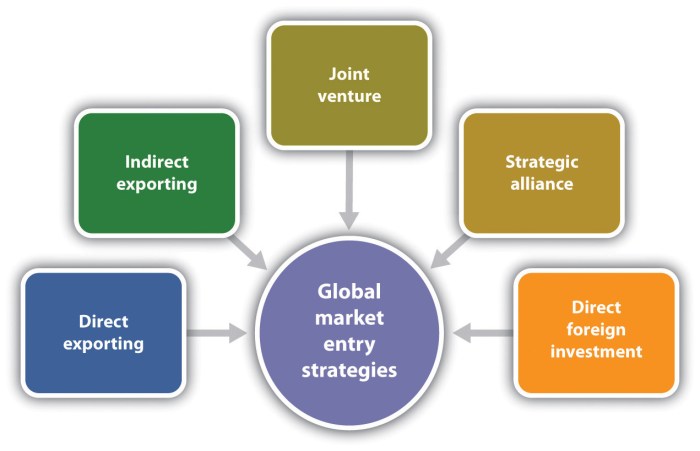
Choosing the right entry mode is critical for navigating the complexities of international business. Each method offers a different balance of control, risk, and investment.
- Direct Exporting: This involves selling products directly to customers or distributors in a foreign country. It offers high control but requires significant investment in marketing, logistics, and customer service. For example, a craft brewery might begin by shipping its beers directly to specialty importers in Europe.
- Licensing: In this arrangement, a company grants a foreign firm the right to use its intellectual property (like patents, trademarks, or technology) in exchange for royalties. A software company might license its operating system to a foreign manufacturer to be pre-installed on their devices. This mode involves lower risk and investment but also less control over how the intellectual property is used.
- Franchising: Similar to licensing, but typically involves a broader business model, including brand name, operating procedures, and marketing support. Fast-food chains are prime examples, with international franchisees operating under the parent company’s established brand and system.
- Joint Ventures: This involves partnering with a local company in the target market to create a new, jointly owned entity. This can provide access to local expertise, distribution networks, and regulatory knowledge, while sharing the risks and rewards. A Western automotive company might form a joint venture with an established Asian manufacturer to produce and sell vehicles in that region.
- Foreign Direct Investment (FDI): This includes establishing a wholly-owned subsidiary or acquiring an existing company in the foreign market. It offers the highest level of control and potential return but also carries the greatest risk and requires substantial investment. A technology firm might set up its own manufacturing plant and sales office in a key European market.
Risks and Rewards of Global Entry Modes
Each entry mode presents a unique risk-reward profile that businesses must carefully evaluate.
- Direct Exporting: Rewards: High control over product, branding, and customer experience; direct market feedback. Risks: High logistical costs, potential trade barriers, currency fluctuations, need for extensive market knowledge.
- Licensing/Franchising: Rewards: Low initial investment and risk, rapid market penetration, royalty income. Risks: Loss of control over brand and quality, potential for intellectual property theft, limited long-term profit potential compared to direct ownership.
- Joint Ventures: Rewards: Shared costs and risks, access to local market knowledge and resources, political advantages. Risks: Potential for conflicts between partners, differing management styles, shared profits, difficulty in exiting the partnership.
- Foreign Direct Investment: Rewards: Full control over operations, potential for highest profits, direct market access and integration. Risks: Highest investment and risk, significant operational complexities, exposure to political and economic instability, cultural integration challenges.
A Step-by-Step Approach to International Market Research
Thorough market research is the bedrock of successful global expansion. It mitigates risks and maximizes the chances of a favorable outcome.
- Define Research Objectives: Clearly articulate what information is needed to make informed decisions about market entry. This might include market size, growth potential, competitive landscape, consumer behavior, and regulatory requirements.
- Identify Target Markets: Based on initial assessments, narrow down the potential countries or regions that align with the company’s product or service offering and strategic goals.
- Gather Secondary Data: Collect existing information from sources like government reports, industry publications, trade associations, and international organizations. This provides a broad overview of the market.
- Conduct Primary Research: Engage directly with the target market through surveys, interviews, focus groups, and competitor analysis. This provides granular, specific insights into consumer needs and preferences.
- Analyze Economic and Political Factors: Assess the stability of the economy, government policies, trade agreements, and potential political risks that could impact business operations.
- Evaluate Cultural and Social Factors: Understand the local culture, consumer habits, communication styles, and social norms to ensure the product and marketing messages resonate effectively.
- Assess Competitive Landscape: Identify key competitors, their market share, strengths, weaknesses, and pricing strategies.
- Examine Legal and Regulatory Environment: Understand import/export regulations, product standards, labor laws, taxation, and intellectual property protection.
- Synthesize Findings and Make Recommendations: Consolidate all gathered information, identify key opportunities and threats, and formulate actionable recommendations for market entry strategy.
Navigating the Complexities: Challenges and Opportunities in Global Expansion
Expanding a business into new international territories is an exciting endeavor, brimming with potential. However, it’s also a path fraught with unique challenges that require careful navigation. Understanding these hurdles and recognizing the emerging opportunities is crucial for turning ambitious expansion plans into tangible success stories.
Cultural and Linguistic Barriers
One of the most significant challenges in global expansion is bridging cultural and linguistic divides.
- Communication Nuances: Direct translations of marketing materials or business communications can often miss the mark, leading to misunderstandings or even offense. Idioms, humor, and subtle social cues can be lost in translation, impacting brand perception and customer relationships. For example, a slogan that works well in English might have an unintended, negative connotation in another language.
- Varying Business Etiquette: Negotiation styles, meeting protocols, and the importance of personal relationships can differ vastly across cultures. A direct, assertive approach that is valued in one country might be perceived as rude in another, where relationship-building is paramount before discussing business.
- Consumer Preferences and Values: What appeals to consumers in one culture may not resonate in another. Tastes, color preferences, product design, and even the perception of value can be deeply rooted in cultural norms and traditions. A product that is a bestseller domestically might require significant adaptation to meet the specific preferences of an international market.
- Workplace Culture: Managing a diverse, international workforce requires understanding different attitudes towards hierarchy, teamwork, work-life balance, and feedback.
Regulatory and Legal Complexities
Each foreign market operates under its own unique set of laws and regulations, presenting a complex web for businesses to navigate.
- Import/Export Regulations: Tariffs, quotas, customs procedures, and product standards can vary significantly, impacting the cost and feasibility of bringing goods into a country. Companies must thoroughly research and comply with these regulations to avoid delays and penalties.
- Business Registration and Licensing: The process of establishing a legal business entity in a foreign country can be lengthy and bureaucratic, often requiring specific licenses and permits that differ from domestic requirements.
- Taxation Laws: Understanding corporate tax structures, value-added tax (VAT), and international tax treaties is crucial for financial planning and compliance. Double taxation can be a significant concern if not managed properly.
- Intellectual Property Protection: Safeguarding patents, trademarks, and copyrights in foreign jurisdictions is vital to prevent infringement and protect brand integrity. Legal frameworks for IP protection can vary widely.
- Labor Laws: Employment contracts, working hours, minimum wage, employee benefits, and termination procedures are subject to local labor laws, which can be complex and strictly enforced.
Overcoming Logistical and Supply Chain Challenges
Establishing efficient and reliable supply chains in international operations presents a distinct set of challenges.
- Transportation and Infrastructure: The quality of transportation networks, including roads, ports, and air cargo facilities, can significantly impact delivery times and costs. Poor infrastructure in some regions can create bottlenecks and delays.
- Inventory Management: Longer lead times and unpredictable transit can make inventory management more complex. Companies need robust forecasting and safety stock strategies to avoid stockouts or excessive carrying costs.
- Customs and Border Control: Navigating customs procedures and border inspections can be time-consuming and unpredictable, especially when dealing with multiple countries.
- Supplier Reliability: Finding and vetting reliable suppliers in foreign markets requires due diligence. Ensuring consistent quality and timely delivery from international partners is paramount.
- Geopolitical Risks: Political instability, natural disasters, or trade disputes in transit countries can disrupt supply chains. Building resilience through diversified sourcing and contingency planning is essential.
Emerging Global Market Trends and Opportunities
Despite the challenges, the global landscape is constantly evolving, presenting exciting new opportunities for forward-thinking businesses.
- The Rise of Emerging Economies: Rapid economic growth in countries across Asia, Africa, and Latin America is creating burgeoning middle classes with increasing purchasing power and demand for goods and services.
- Digitalization and E-commerce: The widespread adoption of the internet and mobile technology is breaking down geographical barriers, allowing businesses to reach consumers directly through online platforms, regardless of their location.
- Sustainability and Ethical Consumerism: Growing consumer awareness and demand for environmentally friendly and ethically produced goods present opportunities for companies that can demonstrate a commitment to sustainability and corporate social responsibility.
- The Gig Economy and Remote Work: The increasing acceptance of remote work and the growth of the gig economy offer businesses access to a global talent pool, enabling them to recruit specialized skills from anywhere in the world.
- Technological Advancements: Innovations in areas like artificial intelligence, automation, and advanced manufacturing are creating new markets and enabling businesses to develop more efficient and innovative products and services for a global audience.
Fueling Growth: Financial and Resource Management for Expansion
Embarking on business expansion and global market entry is a significant undertaking that requires careful financial planning and astute resource management. The success of these ventures hinges not only on a compelling strategy but also on the robust financial foundation and the effective allocation of resources to support ambitious growth. This section delves into the critical financial considerations, investment assessment, risk mitigation, and essential resources needed to propel your business forward on a global scale.
Essential Financial Considerations for Expansion
Securing adequate funding and managing finances effectively are paramount for any expansion initiative.
- Capital Investment Assessment: This involves a detailed analysis of all anticipated costs, including market research, product adaptation, marketing and sales efforts, operational setup (e.g., office space, manufacturing facilities), legal fees, and initial working capital.
- Funding Sources: Businesses can explore various avenues for financing expansion, such as retained earnings, bank loans, venture capital, private equity, government grants, or even initial public offerings (IPOs). The choice of funding source often depends on the scale of expansion and the company’s financial health.
- Budgeting and Financial Projections: Developing comprehensive budgets and realistic financial projections, including sales forecasts, cost estimates, and cash flow statements, is crucial for tracking progress and managing expenditures.
- Currency Exchange and Hedging Strategies: For international expansion, understanding currency fluctuations and implementing strategies to mitigate exchange rate risks, such as hedging with forward contracts or options, is vital to protect profitability.
- Tax Implications: Companies must understand the tax laws in their target markets and their home country to ensure compliance and optimize their tax liabilities.
Framework for Assessing Return on Investment (ROI)
Measuring the profitability and success of global market entry requires a clear framework for evaluating the return on investment.
ROI = (Net Profit from Investment – Cost of Investment) / Cost of Investment * 100%
To effectively apply this, consider the following:
- Define Investment Costs: This includes all direct and indirect costs associated with entering the new market, such as market research, product localization, marketing campaigns, establishment of local operations, and any initial losses incurred during the ramp-up phase.
- Project Net Profit: Estimate the future net profits expected from the new market over a defined period. This requires realistic sales forecasts, consideration of operating expenses in the new market, and the impact of currency exchange rates.
- Time Horizon: The ROI calculation should consider a realistic timeframe for the investment to mature. For global expansion, this might extend over several years due to the time required to build brand awareness, establish distribution, and gain market share.
- Risk Adjustment: Incorporate a risk factor into the ROI calculation. Higher-risk markets or entry strategies might require a higher projected ROI to justify the investment.
- Benchmarking: Compare the projected ROI against industry benchmarks and the company’s internal hurdle rates to determine if the investment is attractive.
Managing Currency Fluctuations and Financial Risks
Operating in international markets exposes businesses to currency volatility and other financial risks.
- Currency Hedging: Utilizing financial instruments like forward contracts, futures, options, and currency swaps can help lock in exchange rates for future transactions, reducing uncertainty.
- Diversification of Currency Holdings: Holding assets and conducting transactions in multiple currencies can naturally hedge against significant fluctuations in any single currency.
- Pricing Strategies: Adjusting pricing in foreign markets to account for currency movements, while being mindful of market competitiveness and consumer price sensitivity, is essential.
- International Trade Finance: Utilizing tools like letters of credit, export credit insurance, and factoring can mitigate payment risks associated with international trade.
- Economic and Political Risk Assessment: Regularly monitoring economic conditions, political stability, and regulatory changes in target markets allows for proactive adjustments to financial strategies.
Key Resources and Partnerships for Global Expansion
Successful global expansion is rarely achieved in isolation; it requires leveraging the right resources and forging strategic partnerships.
- Financial Institutions: Banks with international expertise can provide financing, foreign exchange services, and trade finance solutions.
- Legal and Accounting Firms: Local and international firms specializing in international law and taxation are crucial for ensuring compliance and navigating complex regulatory environments.
- Market Research and Consulting Firms: These firms provide invaluable insights into foreign markets, consumer behavior, and competitive landscapes, helping to inform strategy.
- Logistics and Supply Chain Partners: Freight forwarders, customs brokers, and warehousing providers are essential for managing the physical movement of goods across borders.
- Local Distributors and Agents: Partnering with established local entities can provide immediate access to distribution networks, customer bases, and market knowledge.
- Government Trade Agencies: Many governments offer support for businesses looking to export or invest abroad, including market information, trade missions, and financial assistance.
The Digital Engine: Technology’s Role in Global Reach
In today’s interconnected world, technology is no longer just a supporting tool; it’s a fundamental enabler and accelerator of business expansion and global reach. Digital transformation provides businesses with unprecedented opportunities to connect with new markets, engage with customers on a global scale, and make data-driven decisions that fuel strategic growth. This section explores how technology is revolutionizing the way businesses expand and thrive internationally.
Digital Transformation as an Expansion Catalyst
The embrace of digital technologies fundamentally reshapes how businesses operate, making expansion more accessible and efficient.
- Enhanced Communication and Collaboration: Cloud-based tools, video conferencing, and instant messaging platforms allow teams across different geographical locations to communicate and collaborate seamlessly, breaking down physical barriers to global operations.
- Agile Operations: Digital systems enable businesses to adapt quickly to changing market conditions, streamline processes, and manage complex global supply chains with greater agility.
- Customer Relationship Management (CRM): Digital CRM systems provide a centralized view of customer interactions, allowing businesses to manage customer relationships effectively across different markets and personalize engagement.
- Automation and Efficiency: Technologies like Robotic Process Automation (RPA) and AI can automate repetitive tasks, freeing up human resources to focus on strategic initiatives and customer-facing activities, thereby improving overall operational efficiency.
- Access to Global Talent: Digital platforms facilitate remote work, enabling companies to tap into a wider, more diverse talent pool from anywhere in the world, which is invaluable for specialized roles needed in global expansion.
E-commerce Platforms for Global Customer Acquisition, Daily business news: Business Expansion and Global Market Entry
E-commerce has emerged as a powerful gateway for businesses to reach and serve customers worldwide.
- Direct-to-Consumer (DTC) Sales: Setting up online stores allows businesses to bypass traditional intermediaries and sell directly to consumers in new international markets, offering greater control over branding and customer experience.
- Marketplace Integration: Leveraging established global e-commerce marketplaces (like Amazon, Alibaba, or eBay) provides immediate access to millions of potential customers and built-in logistics and payment infrastructure.
- Localized Online Experiences: E-commerce platforms can be adapted to offer localized versions in different languages, currencies, and payment methods, catering specifically to the preferences of international consumers.
- Data Collection and Analytics: Online sales generate a wealth of data on customer behavior, preferences, and purchasing patterns, which can be invaluable for refining product offerings and marketing strategies in new markets.
- Global Fulfillment and Logistics: Many e-commerce platforms and third-party logistics providers offer solutions for international shipping, warehousing, and order fulfillment, simplifying the complexities of global distribution.
Data Analytics: Informing Expansion and Entry Strategies
The insights derived from data analytics are indispensable for making informed decisions in the complex world of global expansion.
- Market Opportunity Identification: Analyzing demographic data, consumer trends, and economic indicators can help identify underserved markets with high growth potential for expansion.
- Customer Segmentation: Data analytics allows businesses to segment potential customer bases in new markets based on behavior, preferences, and demographics, enabling targeted marketing efforts.
- Competitor Analysis: By analyzing publicly available data, social media sentiment, and online sales figures, businesses can gain a deeper understanding of their competitors’ strategies and market positioning.
- Product/Service Adaptation: Analyzing sales data, customer feedback, and online reviews from existing markets can inform necessary modifications to products or services to better suit the needs and preferences of a new international audience.
- Performance Monitoring: Once a market entry strategy is implemented, data analytics is crucial for tracking key performance indicators (KPIs), measuring success, and identifying areas for improvement or adjustment.
Robust IT Infrastructure: The Backbone of Global Operations
A solid and scalable IT infrastructure is the essential foundation upon which successful global operations are built.
- Scalability: The IT infrastructure must be able to grow and adapt as the business expands into new markets and handles increasing volumes of data and transactions.
- Reliability and Uptime: Consistent access to IT systems is critical for day-to-day operations. Downtime can lead to lost revenue, damaged customer trust, and operational disruptions.
- Security: Protecting sensitive company and customer data from cyber threats is paramount, especially when operating across multiple jurisdictions with varying data privacy regulations.
- Interoperability: Systems should be able to integrate and communicate with each other, both internally and with external partners, to ensure smooth data flow and operational efficiency.
- Support and Maintenance: Having robust IT support mechanisms in place, including local IT expertise where necessary, ensures that systems are maintained, issues are resolved promptly, and the infrastructure remains optimal.
Daily business news: Business Expansion and Global Market Entry – As businesses boldly pursue expansion and global market entry, smart financial strategies are key. Understanding Daily business news: Wealth Management and Asset Allocation Insights empowers these ventures. By wisely managing assets, companies can confidently fuel further business expansion and achieve remarkable success in international markets.
Embracing daily business news on expansion and global market entry fuels incredible growth opportunities. Savvy investors are actively seeking these ventures, recognizing the immense potential for success. Staying informed about these exciting developments empowers businesses to confidently navigate new frontiers and achieve remarkable global reach.